
I’ve been a trader and investor for 44 years. I left Wall Street long ago—-once I understood that their obsolete advice is designed to profit them, not you.
Today, my firm manages around $4 billion in ETFs, and I don’t answer to anybody. I tell the truth because trying to fool investors doesn’t help them, or me.
In Daily H.E.A.T. , I show you how to Hedge against disaster, find your Edge, exploit Asymmetric opportunities, and ride major Themes before Wall Street catches on.
Table of Contents
Our next webinar will be May 14th at 2PM ET.
Disclosure Day: A Playbook For Investors If The Government Confirms It Has Alien Technology
Click HERE To Register

H.E.A.T.
I mostly talk about AI related stuff here, occasionally health and fitness. Today, I’m doing something different, I’m writing about dog food. I am a huge believer that humans should not be eating processed food, and the reason for many of our health problems is because we do. If we shouldn’t’ be eating processed food, than neither should our dogs. I also wanted an excuse to use a picture of Parker for the newsletter.

FYI he’s probably the best fed dog on the planet………
THE SETUP
Walk into any Wall Street strategy meeting and ask about pet food. You will get a shrug. Dog adoptions peaked in 2019. The U.S. dog population has flatlined at roughly 87 million. Category dollar growth collapsed from 20% in 2022 to essentially zero in 2025. Vet bills are up. Households are stretched. Every textbook says the trade is obvious: consumers will trade down. Buy the value brands. Short the premium players. Move on.
That trade is wrong.
Since 2023, the value tier has lost roughly 3 points of share in the $27 billion U.S. dog food category. The super-premium tier — the most expensive food on the shelf, often 5x to 10x the per-meal cost of grocery kibble — has gained 5 points. In a stagnant category. During an affordability crisis. While the consensus narrative was screaming the opposite.
One definition before we go further: when this issue says "super-premium" or "new-age formats," it means fresh, refrigerated, freeze-dried, and air-dried — the products that cost 5-10x mass-market kibble per meal and are taking share anyway. Everything else hangs on that distinction.
This is what happens when a generational consumer shift collides with a sleepy CPG category and nobody on the sell-side notices for two years. We are not looking at a fad. We are looking at the same playbook that turned Chobani into a billion-dollar brand, that made Whole Foods a takeover target, that built Celsius from nothing. The category is being re-anchored around a new buyer with a new value system. And the stocks that own the new shelf are mispriced.
"54% of American dog owners are now Millennials or Gen Z. They do not feed their dogs. They feed their family."
BY THE NUMBERS
+5 pts Super-premium share gain since 2023 | $4.5B New-age format retail sales (2025E) | 7–10% Forecast super-premium CAGR thru 2028 |
Sources: Nielsen IQ category data; sell-side thematic research, May 2026.
THE THESIS: PET HUMANIZATION IS A STRUCTURAL TRADE
The shorthand on the Street is "pet humanization," but that phrase undersells what is actually happening. A generation that delayed marriage, delayed kids, and delayed home ownership has not delayed the desire to care for something. The dog absorbed it. And the spending behavior follows the emotional contract.
Look at the numbers. Gen Z dog ownership has jumped 10 percentage points since 2019. Millennial ownership is up 3 points. Boomer ownership is down 9 points. The composition of the buyer base has flipped — and the new buyer behaves nothing like the old one. 49% of dog owners aged 18-24 fed their dog fresh food in the last twelve months. For owners 65 and older, the number is 27%. That is not a preference gap. That is two different markets.
The younger cohort spends more of their income on pet food, scrutinizes ingredient labels the way their parents scrutinized organic produce labels, and conducts independent research instead of deferring to the vet. There is a name for this in the human food world: the Make America Healthy Again movement. The same instinct — distrust of legacy brands, holistic wellness framing, ingredient-level transparency — is now the dominant force in dog food. Fresh, refrigerated, freeze-dried, air-dried. The "new age" formats grew 9% last year to $4.5 billion. The old kibble market shrank.
Two brands, Freshpet and The Farmer's Dog, control roughly 75% of the super-premium segment between them. Their advertising spend has done the heavy lifting of category education — normalizing the idea that dogs should eat like family members. That is a moat. It is also a setup: every dollar they spend on TV and digital pulls the entire category up-market, which is exactly the dynamic value-chain investors are missing.
SPOTLIGHT: THE MAHA PARALLEL
Why the political-cultural read matters for the trade The same demographic skepticism toward processed foods, seed oils, and industrial agriculture that has reshaped human grocery aisles is now reshaping the pet aisle — about 18 months behind, and with even less institutional resistance. Dog owners conducting their own ingredient research is not noise. It is the leading indicator that the super-premium tier has the same defensive characteristics that made organic, non-GMO, and clean-label categories the most durable share-gainers in human food for the last decade. Translation: this is not a 24-month trade. It is a re-rating. The market multiple on companies levered to the new buyer should be human-premium-CPG, not legacy-pet-CPG. |
WHY NOW: FOUR CHECKPOINTS TO WATCH
The thesis is structural, but the re-rating happens around concrete prints. These are not predictions — they are the data points that, if they break the right way over the next two quarters, force the Street to mark the category higher.
The next 90-180 days Refrigerated growth re-acceleration. Does Freshpet's next earnings print show fresh velocity recovering after the recent execution noise? A clean number reopens the multiple. Premium mix in distribution. Does Chewy's Autoship data show super-premium SKUs growing as a share of repeat orders? That is the cleanest read on category mix shift in real time. Specialty retail comps. Does Pet Valu's same-store sales hold up — and specifically, does premium category mix continue to outperform mass-market kibble at their stores? Private-label launches. Watch Costco's Kirkland and Walmart's premium tiers. If they ship credible super-premium SKUs at deep discounts, the moat narrows. If they don't, the brand-led players keep pricing power. |
Cold-chain capacity is also a constraint, not just a cost line. Fresh dog food does not scale like kibble. It scales like dairy. Refrigerator slots at retail, last-mile logistics, and spoilage discipline are the real bottlenecks — and they take years to build out. That is the moat the incumbents have, and the gating factor that keeps challengers from closing the gap overnight.
THE INVESTABLE SETUP
Three names own the trade. Each plays a different role in the supply chain, which is the point — this is not a single-stock story, it is a category re-rating, and the way to play a re-rating is across the value chain.
WINNERS — THE SUPER-PREMIUM PACK
Company | Ticker | Tier | The Setup |
Freshpet | FRPT | Tier 1 | $1.5B in 2025 sales — 38% of the super-premium segment. Fresh, refrigerated, the literal definition of the "new age" format. Stock has been beaten down on near-term execution noise; the category tailwind has not gone anywhere. Direct play on the demographic shift. |
Chewy | CHWY | Tier 1 | The distribution toll bridge. As super-premium captures more shelf, more of those purchases happen via subscription and auto-ship — Chewy's natural turf. They don't have to pick the winning brand; they collect on every premium SKU sold online. |
Pet Valu Holdings | PET-T (TSX) | Tier 2 | Canadian specialty retailer. Smaller, less covered, more leveraged to the premium-tier mix shift than mass retail. Trades like a forgotten consumer staple. Optionality without paying U.S. multiples. |
PRESSURE POINTS — THE OLD PACK
These are not failing businesses. They are businesses on the wrong side of a generational mix shift. The risk is multiple compression and earnings drift, not a blow-up. Position size accordingly.
Pressure Point | The Issue |
Mass-market kibble brands | Mainstream and value tiers have given back 300+ bps of share since 2023. Volume is flat to down. Price elasticity is a one-way ratchet — they cannot raise prices without accelerating the trade up. |
Legacy big-CPG pet portfolios | The conglomerates that still treat pet food as a commodity SKU within a larger food empire. Their supermarket distribution is exactly where the share is leaking out. Innovation has not kept pace with digitally-native challengers. |
Vet-channel-only models | The new buyer does not defer to the vet on nutrition. They defer to Reddit, TikTok, and ingredient-deck spreadsheets. Distribution moats built on professional gatekeepers are eroding. |
CREDIBILITY FIREWALL: CONFIRMED VS. DIRECTIONAL
Confirmed | Directional |
Super-premium gained 500 bps share of the $27B dog food category, 2023-2025 (Nielsen IQ). | Forecast super-premium growth of 7-10% CAGR through 2028 — sell-side estimate, not realized. |
U.S. dog population at ~87M; adoptions down 12% over four years (AVMA, Shelter Animals Count). | MAHA-style ingredient scrutiny becoming the dominant buyer behavior — directional read on consumer survey trends. |
Gen Z dog ownership +1,000 bps since 2019; Millennial ownership +300 bps (consumer survey, n≈15,000). | Freshpet + Farmer's Dog combined share of super-premium estimated at ~75% — analyst aggregation. |
New-age formats (fresh, freeze-dried, air-dried) at $4.5B retail in 2025E, +9% Y/Y. | Read-through to private-label and conglomerate mass-market brands — implied, not measured directly. |
THE BEAR CASE
What breaks this thesis Macro snap. A real recession — not the slow-grind affordability story, but a job-loss recession — would force genuine trade-down even from emotionally-attached buyers. Dog food is sticky, but it is not immune. Margin reality. Fresh and refrigerated formats carry brutal cold-chain logistics costs. Freshpet has spent years convincing the Street that operating leverage is coming. If the next print disappoints again, sentiment turns ugly. Private label catches up. Costco's Kirkland and Walmart's premium tiers are not asleep. If they ship credible super-premium SKUs at 30-40% discounts, the moat narrows fast. Adoption stays flat. Our entire bull case assumes the existing dog population continues to mix-shift up. If population growth stays zero indefinitely, super-premium growth eventually compresses too — it has to come from somewhere. Regulatory wildcard. The same MAHA-style scrutiny that helps these brands could, in a different administration, hurt them — labeling rules, ingredient standards, and FDA enforcement could cut either way. |
FIVE TAKEAWAYS
1. The headline category — U.S. dog food — looks dead at the index level. The super-premium sub-category is growing at 7-10%, more than double the broader market, and is where the entire pool of category dollar growth is concentrated.
2. Demographics are the fundamental driver. 54% of dog owners are now Millennials or Gen Z, up from 41% in 2019. They spend differently, research differently, and treat the dog as a family member rather than a pet. This is structural, not cyclical.
3. Two brands — Freshpet and The Farmer's Dog — own ~75% of the super-premium tier and are doing the category-education spending that lifts everyone. Distribution platforms (Chewy) and specialty retail (Pet Valu) get paid on the mix shift without picking a single brand winner.
4. The pressure points are not bankruptcies. They are multiple-compression stories: mass-market kibble, legacy big-CPG pet portfolios, and vet-channel-only models. Treat them as underweights, not shorts.
5. The closest analogy is human food a decade ago — when organic, clean-label, and direct-to-consumer brands re-rated the entire grocery aisle. The pet category is roughly where human food was in 2014. The re-rating window is open. The crowd has not shown up yet.
This is not a pet food bet. It is a premiumization bet — on the one consumer in America who refuses to trade down: the person buying food for the kid who happens to have four legs.
Space Exposure Designed For Potential Weekly Payouts
The space economy is no longer just a government program — it’s becoming part of a global industry that is gradually advancing.
But why view long-term growth as the only potential path forward?
SPCI seeks to offer approximately 100% concentrated exposure to the space industry while striving to generate weekly income through a disciplined put credit spread options strategy.
Gain exposure to the “final frontier” and a potential weekly distribution while you wait for the theme to play out.
Discover SPCI.
Distributor: Foreside Fund Services | Investing involves risk including possible loss of principle.
News vs. Noise: What’s Moving Markets Today
Thursday was an awful day for the momentum names, Friday, of course, was great. I’m seeing a lot of people now comparing what’s going on to 1999. Maybe, I was there, feels similar. Then again, maybe this is a once in a lifetime type of move caused by the disruptive power of AI. So how do you play it?
First, look for the bottlenecks to AI, right now it’s memory, photonics, and where do you put data centers (hint: space). Watch out ETF launches. Sometimes I launch an ETF because I just want to make it easy for our wealth management clients to access a pure play theme. Other times I want to time it up right, look what we did with space (same thing we did with European aerospace and defense, inverse ARKK, inverse despac, etc). The obvious names are extended right now, but I’d look at under the radar names here. I gave you an example last week……

Second, watch what’s going on with the release of the UFO files. Look beyond what they are telling you to what they are not telling you. This random twitter person gets it…..
Third, add some commodities. A couple of weeks ago we talked about how $CLF ( ▼ 0.31% ) is the only company that makes the steel that goes into the towers we need for the AI buildout….

We need copper for the AI buildout and the price of copper is nearing an all time high….

A stock like $FCX ( ▼ 3.08% ) looks to be poised for a move…..

Gold miners are trying to break out again…..

And of course the oil and gas names I continue to like as I think there has been a ton of damage done to the energy trade. I think you need to be integrating the NACHO (Not a Chance Hormuz Opens) trade into your portfolio…..
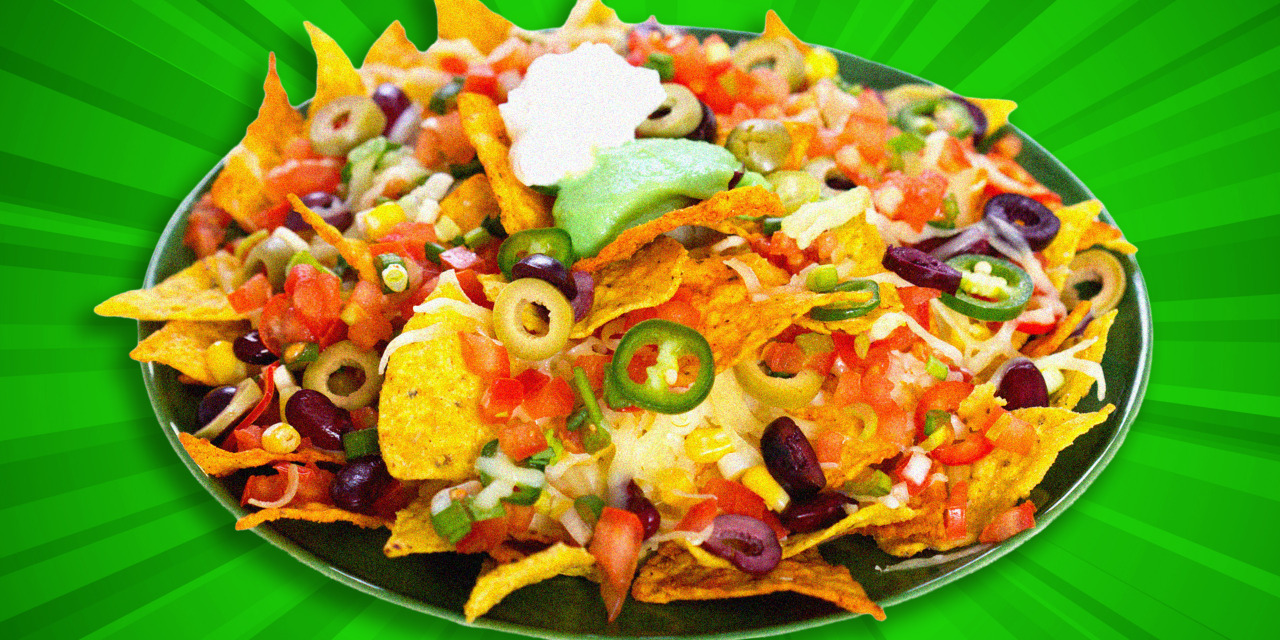
Fourth is watch your position sizing. Our base case for wealth management clients is 25% in thematic equities.
What Iran Tells Us About UFO Disclosure
When governments confront unknown threats in their airspace, defense budgets surge
and the same aerospace and surveillance companies move hardest. On March 2nd,
Northrop jumped 6% and Lockheed 3.3% on the Iran news — and President Trump has
since ordered the formal release of government UAP files, with the Pentagon confirming
compliance. So if a conventional conflict can move these stocks this fast, what happens
when the bigger story breaks?
See the UFOD holdings: [thetruthisoutthereufod.com
ETF News
A Stock I’m Watching

I’ve been saying all along that AI was good for cybersecurity, market finally starting to agree…..

In Case You Missed It
Great talk on with the Acquirers Podcast on markets, value investing, inverse Cramer, and Michael Gayed joins me to talk about taking income from your portfolio and how to get more than 4%……
The H.E.A.T. (Hedge, Edge, Asymmetry and Theme) Formula is designed to empower investors to spot opportunities, think independently, make smarter (often contrarian) moves, and build real wealth.
The views and opinions expressed herein are those of the Chief Executive Officer and Portfolio Manager for Tuttle Capital Management (TCM) and are subject to change without notice. The data and information provided is derived from sources deemed to be reliable but we cannot guarantee its accuracy. Investing in securities is subject to risk including the possible loss of principal. Trade notifications are for informational purposes only. TCM offers fully transparent ETFs and provides trade information for all actively managed ETFs. TCM's statements are not an endorsement of any company or a recommendation to buy, sell or hold any security. Trade notification files are not provided until full trade execution at the end of a trading day. The time stamp of the email is the time of file upload and not necessarily the exact time of the trades. TCM is not a commodity trading advisor and content provided regarding commodity interests is for informational purposes only and should not be construed as a recommendation. Investment recommendations for any securities or product may be made only after a comprehensive suitability review of the investor’s financial situation.© 2026 Tuttle Capital Management, LLC (TCM). TCM is a SEC-Registered Investment Adviser. All rights reserved.
1