
I’ve been a trader and investor for 44 years. I left Wall Street long ago—-once I understood that their obsolete advice is designed to profit them, not you.
Today, my firm manages around $4 billion in ETFs, and I don’t answer to anybody. I tell the truth because trying to fool investors doesn’t help them, or me.
In Daily H.E.A.T. , I show you how to Hedge against disaster, find your Edge, exploit Asymmetric opportunities, and ride major Themes before Wall Street catches on.
I’m hosting a webinar entitled “Why Covered Call ETFs Suck and What to Do Instead” (More Info Below) January 15 2-3pm. Sign Up Here
Table of Contents
Dividends Paid

H.E.A.T.
NVDA is still the top company when it comes to AI, and AI is still the hottest theme in the market. So when Jensen Huang talks we are going to listen to what he says and try to figure out the investment implications…..
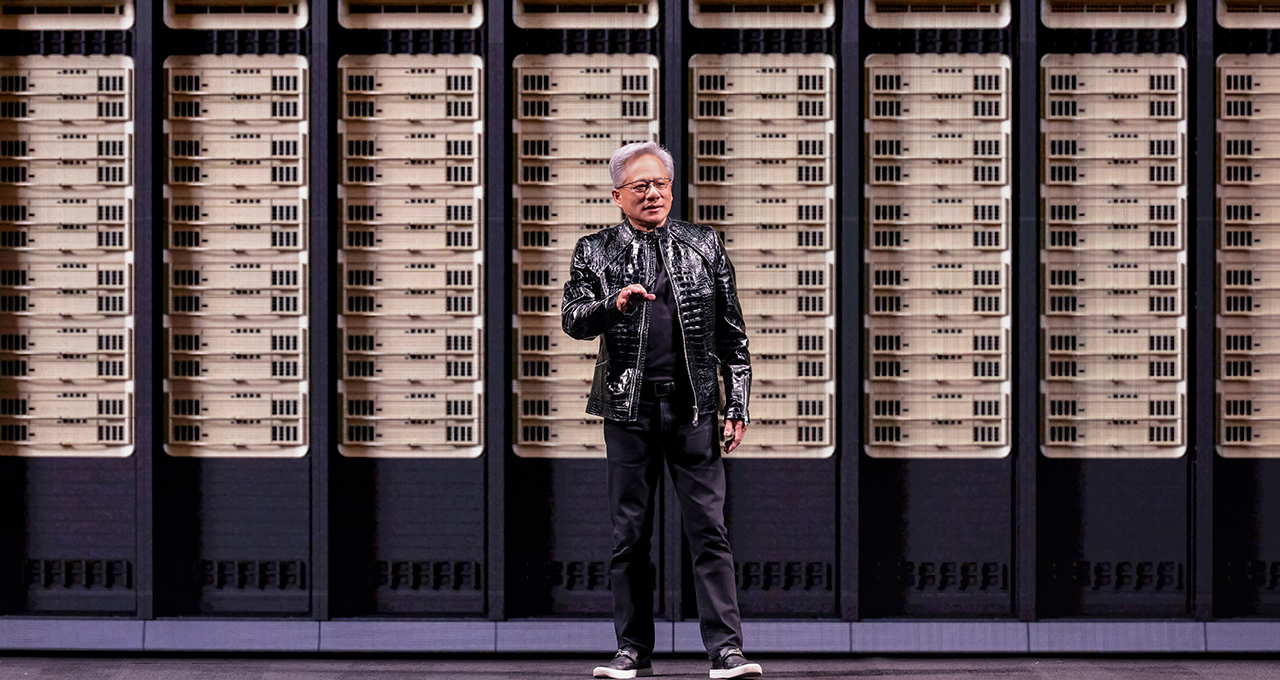
Jensen’s CES Tell: AI Isn’t Slowing Down — It’s Escaping the Screen
Most CES keynotes are product launches. Nvidia’s CES was a land-grab.
Because the “AI trade” is mutating. The next leg isn’t “who has the smartest chatbot?” It’s who can turn compute into action in the real world — cars, factories, warehouses, construction sites. CES 2026 made that theme loud: physical AI (robots + autonomous systems) was everywhere, and Nvidia leaned into it like it’s the next trillion‑dollar category.
Here’s the tell most investors miss: Nvidia isn’t just selling faster chips. It’s trying to become the operating system of physical reality — the “Android layer” for robots and autonomous machines.
What Nvidia actually signaled at CES
1) Rubin is not a chip — it’s a cadence statement
Nvidia is telling the market: the upgrade cycle is accelerating, not slowing. Rubin is slated for availability in 2H 2026, and Nvidia framed it as a step-change platform (not a minor refresh).
The headline claims matter less than the meta-message:
Nvidia says Rubin can drive major inference cost reductions and needs fewer GPUs for certain training workloads vs. Blackwell (their framing: a platform-level efficiency step).
TechCrunch reported Rubin as a meaningful jump vs. Blackwell in both training and inference, plus large efficiency gains per watt — which is exactly where the industry is most constrained.
Translation: if you were waiting for the AI arms race to “cool off,” Nvidia is effectively saying: you’re watching the wrong scoreboard.
2) Alpamayo is Nvidia going “open” to win distribution
Nvidia introduced Alpamayo as an open ecosystem of models/tools aimed at autonomous vehicles + robotics + vision AI — and even framed this as a “ChatGPT moment for physical AI.”
This is a classic platform move:
Open models/tools → faster adoption
Faster adoption → more developers
More developers → Nvidia becomes the default stack
Default stack → Nvidia captures the “tax” across hardware + software + services
TechCrunch’s framing was blunt: Nvidia is trying to make its infrastructure the default substrate for generalist robots.
3) Nvidia is pulling AI out of the data center and into industry
CES wasn’t just robotics theater. It was Nvidia showing where the next demand wave comes from: industrial deployment.
Two examples from the CES flow:
Caterpillar + Nvidia (automation + Omniverse/simulation concepts) — physical AI applied to heavy equipment and construction workflows.
Siemens + Nvidia expanding partnership around industrial AI and digital twins (simulation + AI + factory reality).
Translation: AI is moving from “capex story” to “retooling civilization story.”
What this foreshadows for the AI trade in 2026
Foreshadow #1: The AI trade broadens from “compute” to “systems”
Rubin/physical AI implies the bottleneck is no longer just GPUs. It’s the full stack: networking, memory bandwidth, storage tiers, power delivery, cooling, simulation, integration.
The market still tries to trade AI as a single story. Nvidia is telling you it’s becoming a supply chain + deployment story.
Foreshadow #2: “AI winners” split into manufacturers vs. spenders vs. adopters
CES reinforces the regime shift we’ve been hammering:
Manufacturers get paid (hardware + platforms)
Spenders get questioned (capex, ROI, margins)
Adopters win if they turn AI into productivity (real-world automation)
Nvidia is positioning itself to win even if the market punishes spenders, because it is selling the picks-and-shovels for both data centers and physical AI.
Foreshadow #3: The “AI bubble” risk moves from chips → rollout reality
The next wipeouts won’t come from “AI is fake.”
They’ll come from:
companies that promise robots but can’t ship reliably,
companies that buy the gear but can’t show ROI,
and companies that rent compute with thin margins while input costs rise.
CES is where dreams are cheap. Execution is expensive.
Winners, losers, and second-order winners (with tickers)
First-order winners (direct line to Nvidia’s CES message)
$NVDA — The platform owner. Rubin + Alpamayo + physical AI is Nvidia expanding the map, not defending it.
$CAT — Early signal that heavy industry is moving from “pilot projects” to “operator workflows.” If construction/industrial automation scales, CAT is in the right conversations. (
$SIEGY (Siemens ADR) — Digital twins + industrial AI is exactly how “physical AI” becomes real capex and recurring software/services.
Second-order winners (the “picks & shovels” behind physical AI)
These are the names that benefit if the world shifts from “AI demos” to AI deployment at scale:
Networking / interconnect (physical AI makes networks matter more, not less)
$ANET
$AVGO
Semicap / manufacturing complexity (Rubin cadence = more tool demand over time)
$AMAT
$LRCX
$KLAC
$ASML
Memory / bandwidth (robots + edge inference still eat bandwidth; data center buildout doesn’t stop)
$MU
(Those “second-order” buckets are the underloved truth of physical AI: robots don’t run on vibes — they run on bandwidth, power, and hardware supply chains.)
Likely losers (or at least “the tape gets meaner”)
The AI spenders (capex whales) — great businesses, tougher multiples if ROI lags
$MSFT
$AMZN
$GOOGL
$META
Nvidia’s CES messaging implies the spend continues — which is good for the ecosystem, but it also keeps the market focused on depreciation + ROI + margin defense.
Chip competitors trying to win on “we’re good enough” without the platform gravity
$AMD
$INTC
Not because they can’t compete at all — but because Nvidia is stacking hardware + software + models + partnerships into one distribution engine. CES was Nvidia reminding everyone that the moat is not a benchmark. It’s an ecosystem.
“Robotics/physical AI story stocks” priced on hype, not deployments
(No single must-name here — the category risk is the point.)
If a company’s entire pitch is “humanoid robots are inevitable” but the numbers are a bonfire, CES is gasoline… until the market asks about margins.
CES 2026 – Physical AI Watchlist (Tickers)
Winners / beneficiaries: $NVDA, $CAT, $SIEGY, $ANET, $AVGO, $MU, $AMAT, $LRCX, $KLAC, $ASML
Pressure / risk buckets: $MSFT, $AMZN, $GOOGL, $META, $AMD, $INTC
News vs. Noise: What’s Moving Markets Today
From a market standpoint it looks like the spat between Trump and Powell was just noise. Investors keep looking for a reason to buy international stocks over US stocks, and US stocks keep making highs.

Not saying this won’t impact markets at some point, but that doesn’t mean you should shift towards international stocks (Unless it’s China or European Aerospace and Defense).
Speaking of China….

This is news, and Chinese tech stocks are breaking out again….

Meanwhile, headlines like this are noise….

We’ve had tensions in the Middle East my entire life, and we will continue to have tensions in the Middle East.
Today we have CPI and the start of bank earnings.
A Stock I’m Watching
Today’s stock is Credo (CRDO)…..

Credo (CRDO) is one of the cleaner “picks-and-shovels” ways to stay long the AI buildout without having to win the GPU horse race, because the next bottleneck is increasingly moving from raw compute to connectivity—getting bits on and off accelerators inside the rack and between racks at insane bandwidth and power density. CRDO’s sweet spot is high‑speed data infrastructure (think SerDes/connectivity IP, retimers/optical DSP, and especially active electrical cables) that let hyperscalers extend copper reach, improve signal integrity, and keep watts-per-bit under control as rack-scale clusters grow. What makes it interesting (and why it can stay “asymmetric”) is the system-level posture: CRDO isn’t just shipping a part; it’s shipping a validated solution (silicon + cable + firmware/test/qualification support) that helps customers qualify faster and ramp more broadly—valuable when standards are shifting and every month matters. The bull case is basically math: more accelerators → more links → more high-speed attach per rack, so content can rise even if compute becomes more “utility-like.” The risk (and why the stock whips around) is narrative-driven: “CPO/cableless” headlines, hyperscaler capex timing, and the market constantly trying to front-run the next interconnect architecture—so you want to own it when the fundamentals are improving but the tape is overreacting.
How Else I Can Help You Beat Wall Street at Its Own Game
Inside H.E.A.T. is our monthly webinar series, sign up for this month’s webinar below….

Why Covered Call ETFs Suck-And What To Do Instead
Thursday January 15, 2-3PM EST |
Covered call ETFs are everywhere — and everyone thinks they’ve found a “safe” way to collect yield in a sideways market. |
The truth? |
They cap your upside, mislead investors with “yield” that’s really your own money coming back, and often trail just owning the stock by a mile. |
Join me for a brutally honest breakdown of how these funds actually work — and what you should be doing instead. |
What You’ll Learn:
🔥 Why “high yield” covered call ETFs are often just returning your own capital |
The H.E.A.T. (Hedge, Edge, Asymmetry and Theme) Formula is designed to empower investors to spot opportunities, think independently, make smarter (often contrarian) moves, and build real wealth.
The views and opinions expressed herein are those of the Chief Executive Officer and Portfolio Manager for Tuttle Capital Management (TCM) and are subject to change without notice. The data and information provided is derived from sources deemed to be reliable but we cannot guarantee its accuracy. Investing in securities is subject to risk including the possible loss of principal. Trade notifications are for informational purposes only. TCM offers fully transparent ETFs and provides trade information for all actively managed ETFs. TCM's statements are not an endorsement of any company or a recommendation to buy, sell or hold any security. Trade notification files are not provided until full trade execution at the end of a trading day. The time stamp of the email is the time of file upload and not necessarily the exact time of the trades. TCM is not a commodity trading advisor and content provided regarding commodity interests is for informational purposes only and should not be construed as a recommendation. Investment recommendations for any securities or product may be made only after a comprehensive suitability review of the investor’s financial situation.© 2025 Tuttle Capital Management, LLC (TCM). TCM is a SEC-Registered Investment Adviser. All rights reserved.