
I’ve been a trader and investor for 44 years. I left Wall Street long ago—-once I understood that their obsolete advice is designed to profit them, not you.
Today, my firm manages around $5 billion in ETFs, and I don’t answer to anybody. I tell the truth because trying to fool investors doesn’t help them, or me.
In Daily H.E.A.T. , I show you how to Hedge against disaster, find your Edge, exploit Asymmetric opportunities, and ride major Themes before Wall Street catches on.
H.E.A.T.
Space Exploration Technologies Corp. (Nasdaq: SPCX) beat revenue expectations Tuesday. AI revenue more than tripled from the prior quarter. Starlink doubled its subscriber count from a year ago. The company's AI segment turned adjusted EBITDA positive for the first time.
The stock rose 9.4% during Tuesday's regular session, closing at $125.33. Then it gave almost all of that gain back after hours. The selling didn't stop there — SpaceX closed Wednesday down 13.6% at $108.27, back near the lowest level in its short trading history.
The stock didn't get cut in half. The day's optimism did, and then some.
The reason wasn't that SpaceX's AI business failed. Investors were confronting two overhangs at once. The first was economic: $18.4 billion of quarterly capital spending, committed before the ultimate returns have been proven. The second was technical: roughly 912 million pre-IPO shares becoming eligible for sale.
One tests the company's return on capital. The other tests the market's ability to absorb stock. It's not yet clear how much of Wednesday's decline came from each.
SpaceX gave investors both sides of the AI-capex argument in one report: real demand, improving economics, and a bill growing even faster than the business. The market is no longer asking whether AI infrastructure can generate revenue. It's asking whether the revenue can outrun the reinvestment.
Total revenue came in at $7.8 billion, up 92% year over year. That's against $18.37 billion of quarterly capex. Capex is short for capital expenditures — the cash a company spends on data centers, chips, and satellites before any of it produces revenue. The AI segment alone generated $2.56 billion of revenue, up 213% sequentially. AI capex reached $15.83 billion.
Here's the frame I want you carrying through this issue: SpaceX showed you the first receipt — real customers, real revenue, improving unit economics. It has not shown you the second receipt — cash returns after the full infrastructure bill. Everything below is evidence for one receipt or a reminder the other hasn't arrived.
Starlink Is Paying the Bill — For Now
The one-balance-sheet idea isn't just a metaphor. Connectivity generated $1.66 billion of operating income this quarter, up 79% year over year. AI lost $1.26 billion at the operating level. Space lost $542 million. Add them up, and the whole company came close to operating breakeven — a $143 million loss.
At the operating line, Starlink is the toll booth nearly offsetting the losses at two construction sites. That can be an extraordinarily powerful model if AI and Starship eventually produce their own cash returns. It's also a concentration of risk: SpaceX is leaning on continued Starlink growth to fund two hugely expensive projects at once.
AI Revenue Turned. Cash Returns Didn't.
Segment adjusted EBITDA is operating income before depreciation, amortization, stock-based compensation, and restructuring charges. It's a useful gauge of whether the underlying unit economics are improving. It is not cash flow. SpaceX's AI segment turned positive at $1.15 billion, versus a $609 million loss last quarter.
New cloud-services agreements added $1.6 billion of incremental infrastructure revenue, against $14.1 billion of total contracted sales. Management also disclosed another $6.7 billion signed in the first weeks of the third quarter, ramping in October. That's evidence this quarter's demand wasn't a one-time event.
That's real monetization. But the AI segment still reported a $1.26 billion operating loss. The adjusted result reaches positive territory by adding back about $1.9 billion of depreciation and amortization, $516 million of stock-based compensation, and a small restructuring charge. Add those back, and you land exactly on that $1.15 billion figure. Those are legitimate adjustments. But they don't make the $15.8 billion of cash capex disappear.
Management says new compute deployments can pay back in under a year. That's a powerful claim. But it has to show up in cash generation eventually, not just adjusted EBITDA. The unit economics may be turning. The cash returns haven't caught up yet.
Here's the receipt that makes that concrete. SpaceX generated $3.5 billion of operating cash flow in the first half of the year. It spent $28.5 billion on capital expenditures over that same stretch. Use the simplest definition of free cash flow: operating cash flow minus capex. That's a roughly $25 billion cash deficit through six months.
SpaceX's full 10-Q filing includes a detailed, itemized cash-flow statement — this isn't a missing-disclosure story. It's an economics story. Operations supplied $3.5 billion of cash. Net financing activities supplied more than $100 billion.
SpaceX has plenty of liquidity. But look at where it came from. The company raised roughly $85.7 billion in its IPO and completed a $25 billion bond offering, ending June with $100 billion of cash and marketable securities. This isn't a liquidity problem. It's a return-on-capital question, and right now capital markets — not the business itself — are funding most of the expansion.
Management said third- and fourth-quarter capex should each stay near the second quarter's $18.4 billion. Do the simple math on that guidance. Add $10.1 billion in Q1 and $18.4 billion in Q2. Two more quarters near that level, and full-year capex lands around $65 billion. That's not an analyst forecast. It's what the company's own guidance implies, and it makes the second receipt measurable, not just conceptual.
Where This Lands on the Whole AI and Space Infrastructure Trade
SpaceX told investors, on its first quarterly call as a public company, that it's building data centers in orbit. First launches could come in 2027.
On compute, the numbers keep climbing: more than 2 gigawatts by year-end 2026, closer to 10 gigawatts than 5 by the end of 2027. Roughly 15 gigawatts of power-and-cooling infrastructure should realistically be available on that timeline. Twenty gigawatts is an aspirational pipeline target — one Musk himself said the company probably won't fully hit on schedule.
SpaceX also committed its next phase of AI infrastructure exclusively to NVIDIA Corp.'s (Nasdaq: NVDA) upcoming Vera Rubin architecture. It expects a significant GPU allocation next year — one of the cleanest demand signals NVIDIA has gotten this earnings season. Just remember: it's a plan, not yet recognized revenue.
The flip side showed up the same night. Advanced Micro Devices Inc. (Nasdaq: AMD) shares fell sharply. SpaceX's exclusivity is a real customer loss and a symbolic setback for AMD. But AMD's own strong earnings and above-consensus outlook also failed to clear a very high bar with investors that night. The SpaceX news added to the negative read-through — it didn't cause the whole reaction.
Then there's the memory comment I found most interesting. Musk said memory output is increasing roughly 20% annually. Demand, he said, may be growing 200% or more. That's his estimate, not verified industry data. It also compares growth rates, not the absolute level of supply against demand.
Still, if his view is even directionally right, memory remains a binding constraint. That would support firmer pricing — though it doesn't guarantee the outcome, and it doesn't repeal the memory cycle. SK hynix Inc. (Nasdaq: SKHY) and Micron Technology Inc. (Nasdaq: MU) still trade at far lower forward earnings multiples than most high-growth AI beneficiaries. That creates potential asymmetry if scarcity persists. But memory profits are cyclical, and today's earnings may already reflect unusually favorable pricing.
If you need a way to get exposure to memory stocks…..
Memory Used to Be Cheap
For decades, memory was a commodity. Same chip, different brand, lowest price wins. Nobody built a portfolio around it. Then AI arrived — and the rules changed. High-bandwidth memory now takes 3x more wafer capacity per bit to make than standard DRAM. It's capacity-constrained, hard to qualify, and central to every major AI system running today. What was once a race to the bottom is now a race to keep up.
View HBMX fund holdings →
Distributor: Foreside Fund Services | Investing involves risk including possible loss of principal. <Link = http://www.hbmxetf.com/>
Layer in Connectivity, and the "space infrastructure" thesis gets more literal. Starlink reached 12 million subscribers, adding 1.7 million this quarter. ARPU — average revenue per user, the average monthly revenue per subscriber — held at $66 from the first quarter. That's still below the $85 reported a year ago.
Despite that dilution, connectivity operating income rose 79% to $1.66 billion. Pricing and geographic mix diluted ARPU. But scale and margins still improved.
The FCC has approved the transfer of 65 megahertz of spectrum from EchoStar Corp. (Nasdaq: ECHO) to SpaceX. That materially reduces one of the transaction's largest regulatory risks. Once the broader deal closes, that spectrum moves Starlink Mobile forward. It goes from roughly 5 MHz accessed through telecom partners to 65 MHz SpaceX controls directly. SpaceX's own materials still call the broader transaction pending, so don't call the spectrum fully owned yet.
Management frames the combination of roughly 10x more spectrum and a planned tenfold increase in satellites as "roughly 100 times" current mobile capability. That's management's own multiplication, not an independent estimate. The AI trade and the space trade are no longer two stories. They're one balance sheet.
Stock Winners — For Now
NVIDIA Corp. (Nasdaq: NVDA). An exclusive commitment from a buyer guiding toward 10 gigawatts of compute by 2027 is one of the cleanest demand signals this trade produces. Risk: it's a plan, not recognized revenue, and SpaceX's own execution timeline is extremely ambitious.
SK hynix Inc. (Nasdaq: SKHY) and Micron Technology Inc. (Nasdaq: MU). Musk's comments reinforce memory as a customer-side bottleneck. Risk: his 200%-demand figure is management commentary, not independent data, and memory remains cyclical.
EchoStar Corp. (Nasdaq: ECHO). FCC approval materially de-risks the spectrum transfer. Risk: the broader transaction is still pending, per SpaceX's own disclosure.
Companies With More to Prove
SpaceX itself (Nasdaq: SPCX). AI revenue, contracted sales, and adjusted EBITDA all inflected positively. Risk: the AI segment still lost $1.26 billion at the operating line, and the company ran a roughly $25 billion first-half cash deficit under the simplest free-cash-flow math. Today, roughly 912 million shares — worth about $99 billion at Wednesday's close — become eligible for sale. Not all of them will be sold, but the available float could more than double. I want the market to absorb that supply before sizing up.
Advanced Micro Devices Inc. (Nasdaq: AMD). SpaceX's exclusive NVIDIA decision removes a potential hyperscale customer and strengthens NVIDIA's platform advantage. Risk to the bearish view: AMD's data-center revenue more than doubled, and it retains several major customers. One buyer doesn't determine the accelerator market — and AMD's own earnings and guidance that night also drove its stock reaction.
AT&T Inc. (NYSE: T), Verizon Communications Inc. (NYSE: VZ), and T-Mobile US Inc. (Nasdaq: TMUS). Starlink Mobile is now a credible long-term threat rather than an emergency-coverage product. Telecom shares dropped on the commentary alone. Risk to the bearish view: the three carriers collectively control roughly 1,000 MHz of spectrum against SpaceX's 65. Analysts view a leasing arrangement with an existing carrier as the likely practical bridge to genuine nationwide coverage. The market reacted to the direction of travel, not a current loss of subscribers.
The Unlock Creates Two Opposing Flows
Here's the part that belongs on your radar even if you don't own SPCX directly. Today, roughly 912 million shares become eligible for sale. At Wednesday's $108.27 close, that's about $99 billion of potential stock supply. That doesn't mean all of it gets sold. It does mean the publicly tradable share count could more than double.
But the same unlock could create a second flow later. SpaceX already sits in the Nasdaq-100. Nasdaq weights index members by a modified market value. For low-float stocks like SpaceX, it generally caps the shares counted at three times the shares actually available for public trading. As SpaceX's recognized float grows, the number of shares Nasdaq counts can grow too.
Here's the timing that matters: Nasdaq typically updates those inputs at scheduled quarterly rebalances, not the moment a lockup expires. The next reference date lands at the end of August, with the change taking effect in September.
That creates two opposing flows — insider supply now, and potentially greater passive-fund demand later. Not every unlocked share will necessarily count toward the recognized float, and the exact future index weight can't be known today. But if enough of those shares do count, Nasdaq-100 funds may be required to own materially more SpaceX at the September rebalance.
Your index fund doesn't necessarily buy more SPCX today. It may buy more later, because of index mechanics — not because SpaceX suddenly passed the cash-return test. Index membership is a rules decision. It's not a fundamental endorsement.
Reader Takeaways
SpaceX passed the demand test: AI revenue reached $2.6 billion, and contracted cloud demand continued into the third quarter.
It hasn't passed the cash-return test: first-half capex exceeded operating cash flow by roughly $25 billion.
Starlink is currently the profitable toll booth: its operating income nearly offsets the combined operating losses from AI and Space.
NVIDIA got the cleanest supplier read-through of the quarter: SpaceX committed its next build to Vera Rubin.
The unlock creates two different flows: potential insider selling today, and potentially greater passive-index demand at a later rebalance.
What We Are Doing
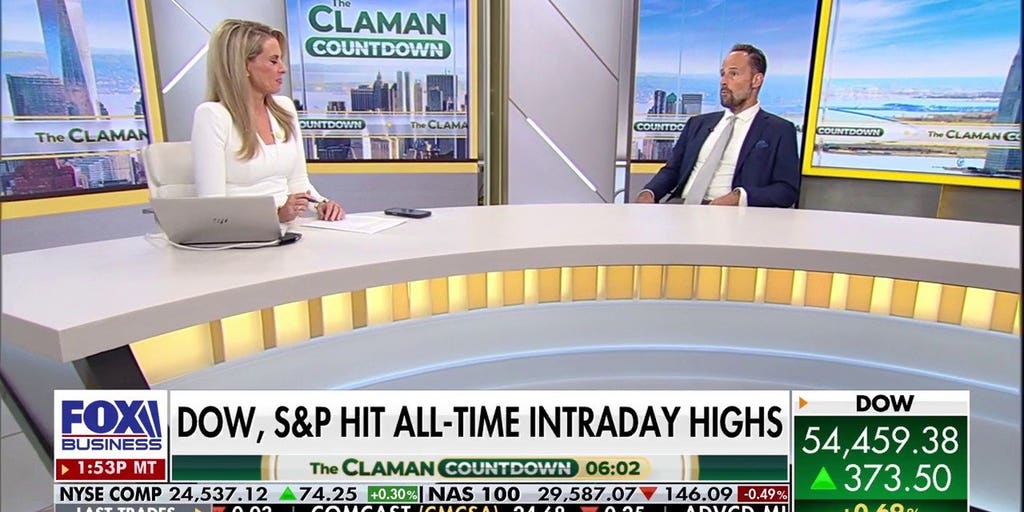
We own SpaceX in three ETFs $SPCI ( ▲ 0.84% ) $UFOD ( ▲ 0.15% ) and $HALX ( ▲ 0.2% ), that’s not changing. I spent yesterday doing a bunch of TV, here’s a bunch of my other thoughts on stocks, SpaceX, and markets in general…..
What Changes My Mind
Terrestrial AI. I get more cautious if adjusted EBITDA keeps improving while the AI operating loss stays large. The companywide cash deficit also needs to narrow over the next several quarters. The under-one-year payback claim is powerful. But it eventually has to show up in operating cash flow, not just adjusted EBITDA.
Space and Starlink. I get more cautious if Starship's launch cadence, the tower-catch program, or the heavier Starlink V3 satellite deployment slips materially. Starship is the critical dependency for V3 and orbital compute — not for the terrestrial AI-hosting business already producing revenue.
Starlink Mobile. I get less concerned about the threat to incumbent carriers if the deployment timetable slips. Same if SpaceX ends up needing a carrier partnership for genuine nationwide coverage.
The Bottom Line
SpaceX didn't prove that every dollar of AI capex will earn an adequate return. It proved the demand is real enough to generate revenue, contracts, and positive adjusted EBITDA faster than Wall Street expected. It also showed something else. Management is committing new capital faster than those improving economics are turning into cash shareholders can keep.
SpaceX now has rockets, satellites, AI models, terrestrial data centers, orbital-compute plans, spectrum, and mobile ambitions tied to one balance sheet. At the operating line, Starlink is currently the toll booth nearly offsetting the losses at two construction sites. That's huge strategic leverage. It's also a lot of financial complexity.
The market isn't rejecting the AI-and-space infrastructure thesis. It's asking SpaceX the same question it's asking Alphabet, Meta, and every other major spender: when does the spending become cash shareholders can keep?
AI infrastructure just went to orbit. The market wants to know who pays for the fuel.
The H.E.A.T. (Hedge, Edge, Asymmetry and Theme) Formula is designed to empower investors to spot opportunities, think independently, make smarter (often contrarian) moves, and build real wealth.
The views and opinions expressed herein are those of the Chief Executive Officer and Portfolio Manager for Tuttle Capital Management (TCM) and are subject to change without notice. The data and information provided is derived from sources deemed to be reliable but we cannot guarantee its accuracy. Investing in securities is subject to risk including the possible loss of principal. Trade notifications are for informational purposes only. TCM offers fully transparent ETFs and provides trade information for all actively managed ETFs. TCM's statements are not an endorsement of any company or a recommendation to buy, sell or hold any security. Trade notification files are not provided until full trade execution at the end of a trading day. The time stamp of the email is the time of file upload and not necessarily the exact time of the trades. TCM is not a commodity trading advisor and content provided regarding commodity interests is for informational purposes only and should not be construed as a recommendation. Investment recommendations for any securities or product may be made only after a comprehensive suitability review of the investor’s financial situation.© 2026 Tuttle Capital Management, LLC (TCM). TCM is a SEC-Registered Investment Adviser. All rights reserved.