
I’ve been a trader and investor for 44 years. I left Wall Street long ago—-once I understood that their obsolete advice is designed to profit them, not you.
Today, my firm manages around $4 billion in ETFs, and I don’t answer to anybody. I tell the truth because trying to fool investors doesn’t help them, or me.
In Daily H.E.A.T. , I show you how to Hedge against disaster, find your Edge, exploit Asymmetric opportunities, and ride major Themes before Wall Street catches on.
I’m hosting a webinar entitled “Why Covered Call ETFs Suck and What to Do Instead” (More Info Below) January 15 2-3pm. Sign Up Here
Table of Contents
H.E.A.T.
The AI Gold Rush Isn’t in GPUs… It’s in Concrete, Copper, and Cooling
The headline everyone’s missing
For 20 years, commercial real estate (CRE) was supposed to be the boring diversifier. Tech melted down? Office leases and apartments chugged along.
That relationship is breaking.
Data centers are turning CRE into a high-beta derivative on the AI arms race—and the numbers are getting big enough that the “office building economy” is quietly being replaced by the “server-farm economy.”
JLL expects North America to see roughly $1T of new data-center construction between 2025 and 2030.
McKinsey’s view is even more blunt: to meet demand, the data-center ecosystem likely requires well over $1T in investment by 2030, and global demand for capacity could triple by then.
And it’s already showing up in the tape: Reuters flagged U.S. data-center construction spending hitting record levels (running at a ~$40B annual pace mid-2025).
So yes—real-estate investors are getting rich.
But here’s the part most people still don’t understand:
The best “second-order” winners aren’t the landlords. They’re the companies that get paid to build the digital factories.
The “Second-Order” Truth: Data Centers Are MEP Monsters
If you’ve never toured a modern AI data center, picture this:
An office tower is a box for humans.
A data center is a power plant + refrigeration system + high-security vault that happens to contain servers.
That matters because the value doesn’t just go into land and walls—it explodes into:
Power delivery (substations, switchgear, transformers, UPS)
Cooling (chillers, liquid cooling, airflow management)
Backup power (gensets, fuel systems, controls)
Specialty electrical/mechanical contracting (the high-margin, high-skill labor)
Grid buildout (transmission, distribution, interconnection)
McKinsey explicitly highlights how much of the spend is tied to mechanical/electrical systems—procurement and installation of MEP can exceed $250B by 2030 as demand scales.
And JLL’s 2025 read on the market shows why suppliers love this: big pipelines, heavy preleasing, and tight vacancy that keeps the build machine running.
Why this boom is different from “normal” CRE
Traditional CRE is diversified by tenant type: a building has law firms, insurers, consultants, etc.
Data centers are not that.
They’re increasingly dependent on a narrow set of hyperscalers and AI-driven demand. And the deal structures are getting more financial-engineered—big enough that they’re pulling in private credit and SPVs.
Example: Meta’s Louisiana Hyperion site financing (reported by Reuters) involved $27B+ of debt and ~$2.5B of equity in an SPV, with Meta as developer/operator/tenant—but not the borrower. That’s a neon sign that “AI real estate” is now its own capital-markets ecosystem.
Translation:
It’s no longer “buy a building, collect rent.” It’s “finance an industrial megaproject that must hit performance specs.”
That’s why the cleanest way to ride the boom can be upstream—the people selling the required hardware, services, and labor regardless of which landlord wins the lease.
The Winners List: Second-Order Beneficiaries of Data-Center Construction
Not advice—this is the “who gets paid when shovels hit dirt” map.
1) Grid buildout: the toll collectors on megawatts
If power is the new real estate, these are the companies building the on-ramps.
$PWR (Quanta Services) — transmission/distribution, substations, utility-scale electrical work. When interconnection queues explode, this is the workforce behind the solution.
$MYRG (MYR Group) / $MTZ (MasTec) — grid and electrical infrastructure exposure (more cyclical, but directly tied to build volume).
$HUBB (Hubbell) — grid components (connectors, hardware, utility solutions).
Utilities & IPPs (region-specific winners) — not “construction suppliers,” but they’re the ones selling the electrons and getting rate-base tailwinds when upgrades are approved.
Why they win: even if AI demand “slows,” the grid backlog doesn’t magically disappear. Data-center power requirements force upgrades that take years.
2) Electrical guts inside the fence: where the money actually goes
This is the high-margin plumbing inside the campus—where data centers differ most from offices.
$ETN (Eaton) — switchgear, power distribution, electrical equipment that becomes bottlenecked in fast build cycles.
$VRT (Vertiv) — critical power + thermal management purpose-built for data centers.
$POWL (Powell Industries) — switchgear/electrical systems leveraged to industrial power demand.
Why they win: data centers don’t “value engineer” power reliability. Downtime is existential.
3) Cooling: the quiet kingmaker of AI compute
AI racks are hotter, denser, and increasingly push liquid cooling and more complex thermal systems.
$TT (Trane Technologies) — commercial HVAC and thermal solutions.
$CARR (Carrier) — HVAC exposure + data-center-related thermal demand.
$JCI (Johnson Controls) — building systems, controls, cooling infrastructure.
Why they win: AI doesn’t just require chips—it requires heat removal. Cooling becomes a gating item, not a nice-to-have.
4) Backup power: “the grid isn’t enough” trade
Even the best interconnection doesn’t eliminate redundancy requirements.
$GNRC (Generac) — backup generation + power management (more than residential; data-center redundancy is a structural tailwind).
$CMI (Cummins) — generators/engines powering industrial backup (not a pure play, but real exposure).
$CAT (Caterpillar) — large-scale power systems exposure across industries.
Why they win: data centers are engineered for uptime—backup power is not optional.
5) Specialty contractors: the real “picks and shovels”
These are the firms that actually show up and install the systems—often with backlog visibility and pricing power during booms.
$EME (EMCOR) — mechanical/electrical contracting with data-center exposure.
$FIX (Comfort Systems USA) — HVAC/mechanical systems work (often directly tied to data-center build cycles).
$STRL (Sterling Infrastructure) — infrastructure/site work exposure in growth markets.
Why they win: in a buildout, equipment is important—but skilled labor and execution capacity become the choke point.
6) Materials: the unsexy volume trade
If you’re pouring pads and building massive shells, the “dumb” inputs move a lot of dollars.
$VMC (Vulcan Materials) / $MLM (Martin Marietta) — aggregates for concrete and infrastructure.
$NUE (Nucor) — steel exposure (again, not pure play, but volume helps).
$FCX (Freeport-McMoRan) — copper is everywhere in electrification and power buildout.
Why they win: you don’t get “AI scale” without physical scale.
7) Financing & capital-market enablers: the shadow beneficiaries
This is adjacent to construction, but it matters because it determines whether projects actually get built.
$OWL (Blue Owl) — increasingly involved in large AI/data-center financings (the “private credit meets AI infrastructure” angle).
Why they win: if banks and public markets get tighter, private capital often fills the gap—at a price.
The Landmines: where this boom can bite
1) Delivery risk is real
Unlike office projects, data centers have technical performance and timing constraints. Miss the power, miss the schedule, miss the redundancy spec—and economics change fast.
2) Power is the bottleneck
The market can finance buildings faster than utilities can build generation/transmission. That mismatch creates “starts and stops,” and that’s when developers get hurt.
3) CRE portfolios are getting tech-beta
Data centers feel like real estate, but they trade like AI infrastructure. If AI capex sentiment turns, data-center risk premiums can gap wider (even if leases are long).
If you want to play the “data centers are replacing offices” super-cycle without having to underwrite which landlord wins which hyperscaler:
Own the toll roads.
Power gear, cooling, contractors, grid buildout.
Those businesses get paid if the AI arms race is euphoric…
…and they still get paid if the arms race just becomes “baseline infrastructure” that governments and utilities have to build anyway.
News vs. Noise: What’s Moving Markets Today
The VIX Is Whispering “All Clear”… While the Market Is Building New Fault Lines
Here’s the headline Wall Street is acting on right now:
Fear is gone.
The VIX is back below the “everyone relax” line, and the tape is behaving like we’re sliding into 2026 with a soft landing, a Santa rally, and a clean runway.
But here’s the part most people miss:
Low volatility doesn’t mean low risk. It often means risk is being priced in the wrong place.
What actually happened
The VIX is sitting sub‑14 (low by any modern standard), after a year where it briefly spiked north of 50 back in the spring. That’s a dramatic round-trip in “panic premium.”
The S&P keeps notching highs, and strategists are lining up for the casual “another +10% next year” take. (That’s not crazy… it’s just consensus.)
Under the surface, AI-linked categories are still doing outsized work for GDP—meaning the economy is getting real lift from data centers, servers, software, and R&D even as the narrative shifts around AI.
At the same time, some “risk thermometers” are flashing complacency: BofA’s bull/bear-type sentiment measures are elevated enough that contrarians start licking their chops.
Why this matters (the “News”)
1) Complacency is back… and it’s cheapening the price of insurance.
When the VIX is pinned low, the market is basically saying: “Nothing bad is likely to happen soon.”
That’s exactly when hedges are cheapest, and exactly when people stop buying them.
The practical implication isn’t “sell everything.” It’s this:
If you’re going to own risk into 2026, you want to own it with seatbelts on—because the market is pricing seatbelts like nobody needs them.
2) The AI trade is no longer a single trade — it’s splintering.
The 2023–2025 regime was easy: “AI = up.”
The 2026 regime is messy: AI winners and losers separate based on balance sheets, funding, utilization, and monetization.
That creates a weird setup where:
The index looks calm,
but inside the index, leadership churns and crowded positions unwind fast.
That’s how you get low VIX + high dispersion. That’s not “safe.” That’s “selective.”
3) The economy is quietly more dependent on AI capex than people want to admit.
When AI-related investment categories represent an outsized share of real growth, you’ve effectively built a mini “capex engine” inside GDP.
Implication:
If AI capex keeps ramping → GDP looks sturdier than the labor market would suggest.
If AI capex hiccups (financing, grid constraints, overbuild, demand timing) → you can get a growth air pocket even if consumers are okay.
That’s not theoretical. It’s exactly how “one sector” turns into “macro” when it becomes big enough.
4) Sentiment indicators are starting to lean euphoric.
BofA’s positioning/sentiment measures have crept high enough to trigger the classic contrarian read: crowded optimism can be fragile optimism.
This doesn’t mean a crash is imminent.
It means the market is less shock-absorbed than it looks.
What’s mostly “Noise” (for now)
1) “VIX low = guaranteed melt-up.”
Low vol can persist… until it doesn’t. The VIX is a current mood indicator, not a future event predictor.
2) “AI is over.”
If AI is still a meaningful contributor to growth and capex, then the theme isn’t dead — it’s maturing into a financing/ROI story. The bubble talk is loud. The build-out is still real.
3) “Broadening breadth = no more risk.”
Broader participation is healthy… but it can also mask the fact that the most crowded trades are still brittle.
The real implication for 2026
The market is pricing the average outcome.
But 2026 is shaping up to be a year of fat tails:
Inflation re-acceleration risk if growth stays hot and policy stays loose.
Rate-path uncertainty if the Fed gets boxed in between labor softening and inflation stickiness.
AI capex funding shocks (credit spreads, lease obligations, cost of capital).
Policy volatility (fiscal impulse, Fed leadership politics, global FX spillovers).
Low VIX doesn’t cancel those. It just means the market isn’t paying for them right now.
How I’d translate this into portfolio thinking
Not advice — just the framing:
News: Vol is cheap → insurance is cheap.
If you’re running risk into 2026, this is when you decide what you’d do if you’re wrong — not after the gap down.News: AI is turning into a cash flow + balance sheet game.
Own the self-funders and the toll collectors. Be careful with the “promise” trades.Noise: Daily VIX prints and holiday tape.
What matters is whether complacency persists while macro uncertainty rises — that’s when the trap gets set.
A Stock I’m Watching
Today’s stocks is Monolithic Power Systems (MPWR)…..

Monolithic Power Systems (MPWR) is one of the cleanest “AI infrastructure picks-and-shovels” names as the bottleneck shifts from compute availability to power delivery and efficiency. As racks and clusters get denser, every incremental watt pushed into GPUs/accelerators creates a cascading requirement for tighter regulation, higher conversion efficiency, better thermal behavior, and more complex multi-rail architectures—exactly where MPWR’s high-density power management and integrated module approach tends to win share and expand content-per-rack. The key asymmetry is that this is not a one-cycle GPU story: as hyperscalers move toward higher-power rack-scale designs (and eventually more standardized, higher-voltage architectures), the power “bill of materials” rises structurally, and MPWR’s attach opportunity compounds with each generation. If 2026 is the year the market stops asking “who has the fastest chip?” and starts asking “who can power this reliably at scale?” MPWR belongs near the top of that list.
In Case You Missed It
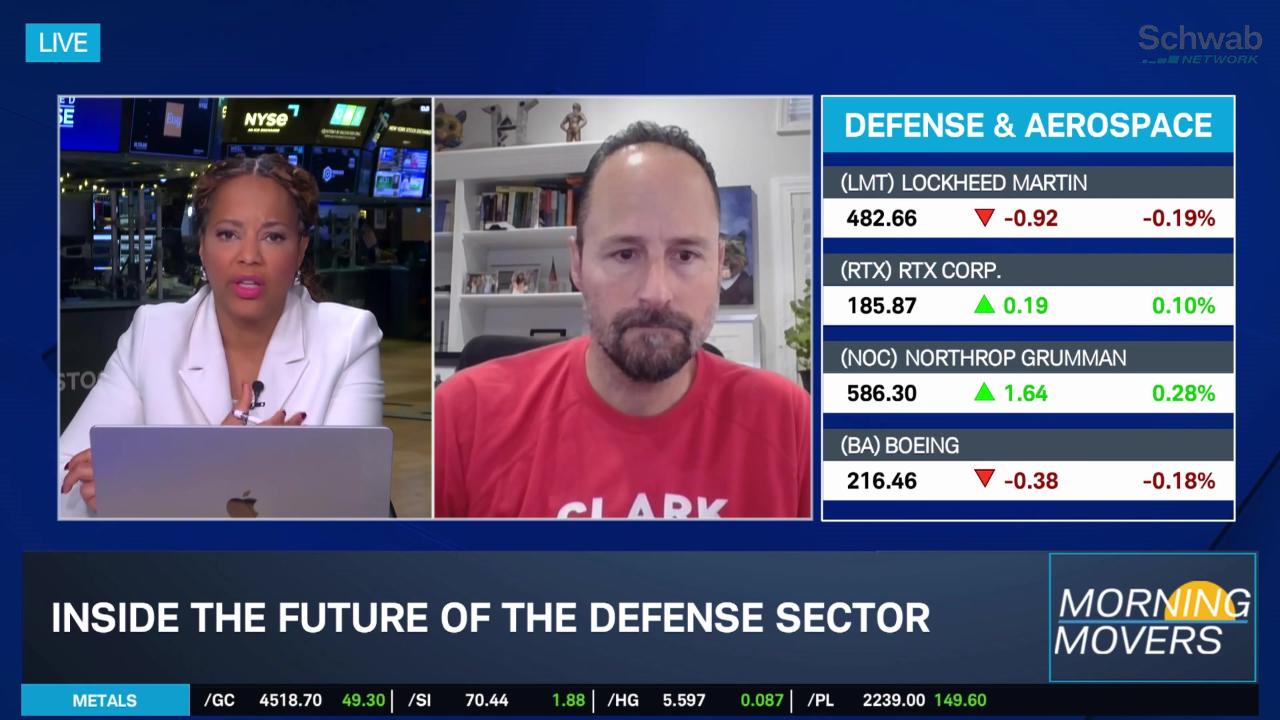
My recent discussion about the implications of AI…..
How Else I Can Help You Beat Wall Street at Its Own Game
Inside H.E.A.T. is our monthly webinar series, sign up for this month’s webinar below….

Why Covered Call ETFs Suck-And What To Do Instead
Thursday January 15, 2-3PM EST |
Covered call ETFs are everywhere — and everyone thinks they’ve found a “safe” way to collect yield in a sideways market. |
The truth? |
They cap your upside, mislead investors with “yield” that’s really your own money coming back, and often trail just owning the stock by a mile. |
Join me for a brutally honest breakdown of how these funds actually work — and what you should be doing instead. |
What You’ll Learn:
🔥 Why “high yield” covered call ETFs are often just returning your own capital |
The H.E.A.T. (Hedge, Edge, Asymmetry and Theme) Formula is designed to empower investors to spot opportunities, think independently, make smarter (often contrarian) moves, and build real wealth.
The views and opinions expressed herein are those of the Chief Executive Officer and Portfolio Manager for Tuttle Capital Management (TCM) and are subject to change without notice. The data and information provided is derived from sources deemed to be reliable but we cannot guarantee its accuracy. Investing in securities is subject to risk including the possible loss of principal. Trade notifications are for informational purposes only. TCM offers fully transparent ETFs and provides trade information for all actively managed ETFs. TCM's statements are not an endorsement of any company or a recommendation to buy, sell or hold any security. Trade notification files are not provided until full trade execution at the end of a trading day. The time stamp of the email is the time of file upload and not necessarily the exact time of the trades. TCM is not a commodity trading advisor and content provided regarding commodity interests is for informational purposes only and should not be construed as a recommendation. Investment recommendations for any securities or product may be made only after a comprehensive suitability review of the investor’s financial situation.© 2025 Tuttle Capital Management, LLC (TCM). TCM is a SEC-Registered Investment Adviser. All rights reserved.