
I’ve been a trader and investor for 44 years. I left Wall Street long ago—-once I understood that their obsolete advice is designed to profit them, not you.
Today, my firm manages around $5 billion in ETFs, and I don’t answer to anybody. I tell the truth because trying to fool investors doesn’t help them, or me.
In Daily H.E.A.T. , I show you how to Hedge against disaster, find your Edge, exploit Asymmetric opportunities, and ride major Themes before Wall Street catches on.
Table of Contents
H.E.A.T.
20 Watts Estimated power draw of the human brain | 1.15B Neurons Intel’s Hala Point neuromorphic research prototype | 0 Dedicated U.S.-listed ETFs tracking this category today | 1 Cleanest public proxy in the entire space — not the same as a complete basket |
The next edge-AI bottleneck is not intelligence. It is power.
GPUs dominate the cloud because they are spectacular at brute-force parallel math. But the edge is a different problem. A drone, a hearing aid, a satellite sensor, a factory camera, or a wearable cannot burn data-center power just to decide whether anything changed.
That is where neuromorphic computing matters.
In the late 1980s, Caltech professor Carver Mead gave the industry a word for a different kind of computing: neuromorphic. Instead of moving data through the brute-force machinery of conventional processors, build circuits that behave more like nervous systems — sparse, event-driven, and quiet until something changes. These chips do not process every frame, every pixel, every millisecond. They fire when something changes.
For most of the decades since, this stayed exactly where Wall Street puts ideas it doesn’t understand yet: the research folder.
That folder is closing.
NOT AN ANTI-NVIDIA CALL GPUs dominate training and high-throughput cloud inference, and that is not changing. Neuromorphic chips matter where the constraint is different: always-on sensing, battery life, real-time reaction, privacy, and edge deployment. This is a complementary architecture for a different problem — not a replacement thesis. |
PART I: RESEARCH VALIDATION VS. COMMERCIAL ADOPTION
This is not speculative science, but the distinction between proof-of-concept and product matters here. Intel’s Loihi 2 chip and the Hala Point system — 1.15 billion neurons, 128 billion synapses, 140,544 neuromorphic processing cores — are real, operating research prototypes. Intel itself describes Hala Point as a research system, not a commercial product. IBM’s NorthPole is the same category: a working research chip that IBM says delivers large energy, space, and latency efficiency gains versus CPU/GPU architectures on benchmark tasks like ResNet-50 and YOLOv4.
BrainChip’s Akida processor is the closest thing to a commercial bridge — already embedded in shipping products doing always-on sensing at power budgets a GPU cannot touch.
The architecture is no longer science fiction. Intel and IBM validate the research path. The unresolved question is not whether neuromorphic computing can work — it clearly can. It is whether it can become a material revenue line. That is the entire investment issue.
“The technology is real before the wrapper exists — and the early money is made in the names that get there first, not the fund that eventually indexes them.” |
PART II: THE GAP NOBODY HAS FILED FOR
Here is the part that should make an investor lean forward: there is currently no dedicated, investable wrapper for this theme. Some broad robotics and AI fund filings mention “neuromorphic processing” as a subtheme buried inside a much wider cognitive-robotics category — that is not the same thing as a dedicated competitor, and it is not coverage.
The reason no clean fund exists yet is structural, not strategic: the public-equity bench is thin. BrainChip is the cleanest public-market neuromorphic proxy available today — but cleanest does not mean clean. It is ASX-listed with a thinly traded OTC U.S. line, limited institutional liquidity, and revenue that remains small relative to the narrative built around it. Everyone else worth watching — the companies actually building spiking neural network hardware, event-driven vision sensors, and in-memory compute tuned for this workload — is still private.
That thinness is precisely the setup. Robotics ETFs looked like this in 2014. Cybersecurity funds looked like this in 2011. The category becomes obvious only after the bench fills in — and by then, the early names have already re-rated.
PART III: NAMING THE PRIVATE BENCH
The public bench breaks into three tiers, and conflating them is the most common mistake an outside investor makes with this theme.
The first tier is the cleanest public proxy — a single company whose entire commercial identity is the architecture itself, already shipping into production sensing applications, but burdened with real liquidity and scale problems. The second tier is research-credible but business-diluted: large, diversified semiconductor companies for whom neuromorphic work is real and well-funded, but immaterial against the size of their broader revenue base. The third tier is the enabling layer — ASIC partners, event-based vision sensor makers, and in-memory compute developers whose relationship to the theme is disclosed but partial and low-purity.
None of those three tiers is where the asymmetric return sits. The real catalyst bench is private, and it is worth naming specifically. Innatera builds brain-inspired, ultra-low-power edge processors — its Pulsar spiking neural processor is the closest private analog to a pure-play neuromorphic chip company. SynSense combines neuromorphic chips and vision systems across a product line that includes Xylo, Speck, and DVS-based sensing. Prophesee is event-based vision rather than a processor pure play — its Metavision systems capture sparse changes instead of full video frames, making it more adjacent than equivalent. These are not interchangeable businesses, and the first one of them to reach the public market — by IPO, SPAC, or acquisition — will do more to validate and re-rate this category than any incumbent product announcement.
WINNERS, WATCH LIST & THE PRIVATE BENCH
NAME / TICKER | POSITION | WHY IT MATTERS | RISK |
BrainChip (ASX: BRN / OTCQX: BRCHF) | CLEANEST PUBLIC PROXY | Closest thing to a commercial bridge between research and product — Akida is embedded in shipping sensing applications today, not lab demos. | Cleanest does not mean clean. Thin float, OTC liquidity drag on the US line, and revenue still small relative to the narrative |
Intel (NASDAQ: INTC) | RESEARCH VALIDATOR — NOT A PURE PLAY | Loihi 2 and the Hala Point research prototype prove the architecture scales inside a company with permanent balance-sheet backing. | Neuromorphic work is a rounding error against Intel’s core business — highly diluted exposure |
IBM (NYSE: IBM) | RESEARCH VALIDATOR — NOT A PURE PLAY | NorthPole is a legitimate research-stage achievement in brain-inspired inference efficiency, built by a company that ships at scale. | Same dilution problem as Intel — an investor is buying a conglomerate, not a thesis |
Sony (NYSE: SONY) | EVENT-VISION ADJACENCY — HIGHLY DILUTED | Commercial relationship with a leading private event-based vision sensor maker covers the “eyes” half of the neuromorphic stack. | Sony is a sprawling conglomerate — this exposure is a rounding error inside a rounding error |
ASIC & Commercialization Partners (MegaChips, Renesas) | ENABLING LAYER — VERY LOW PURITY | Disclosed silicon relationships tied to the cleanest public proxy’s processor — the picks-and-shovels layer of the ecosystem. | Low revenue purity; the neuromorphic-specific contribution is thin and not separately broken out |
Memory / Compute Architecture Enablers (Weebit Nano and peers) | ADJACENT — NOT SYNONYMOUS | ReRAM and related in-memory compute architectures explicitly positioned for neuromorphic and edge-AI workloads. | Adjacent technology, not the same thing as neuromorphic processing — pre-revenue-scale risk profile applies |
Private Catalyst Bench: Innatera, SynSense, Prophesee, and other event-driven / SNN hardware developers | THE REAL CATALYST | Innatera is the closest private analog to a pure-play neuromorphic processor (Pulsar SNN chip). SynSense combines neuromorphic chips and vision systems. Prophesee is event-based vision, not a processor pure play. Any one of these reaching the public market sets the benchmark the rest of the sector gets measured against. | All currently private — no direct way to buy in yet, and IPO/acquisition timing is entirely unpredictable |
PRESSURE POINTS
PRESSURE POINT | WHAT TO WATCH | TIME HORIZON |
Pure-play revenue traction | Material improvement in commercial revenue for the public anchor would make the entire category narrative more credible to fund issuers and allocators alike. | Ongoing |
A private name goes public | Any IPO, SPAC, or acquisition involving the leading private spiking-neural-network or event-driven processing developers adds real public-market breadth. | 12–18 months |
A diversified incumbent spins out a vehicle | Intel or IBM creating any separately investable neuromorphic or brain-inspired architecture vehicle would convert research exposure into investable exposure. | Uncertain — event-driven |
Multiple partners disclose material revenue | If several commercialization partners begin separately reporting material neuromorphic-linked revenue, a broader public basket becomes defensible. | 12–24 months |
A competitor files first | Any fund issuer filing a dedicated neuromorphic or brain-inspired AI product would force the rest of the industry — and the underlying stocks — to reprice the category overnight. | Ongoing — event-driven |
CREDIBILITY FIREWALL
SOURCED / REPORTED | MODELED / INFERRED | EDITORIAL VIEW |
Intel’s Hala Point research prototype contains 1.15 billion neurons, 128 billion synapses, and 140,544 neuromorphic processing cores; Intel describes it as a research system, not a commercial product. IBM’s NorthPole is similarly a disclosed research chip | The relative power-efficiency advantage of event-driven architectures over GPU-based inference at the edge is inferred from architectural design and IBM’s reported benchmark gains, not from a standardized third-party industry benchmark | These systems are credibility validators for the architecture, not investable pure plays in their own right — the dilution problem is real |
BrainChip is the only company shipping a commercial neuromorphic processor into production sensing applications among the public names reviewed | The characterization of BrainChip as the “cleanest public proxy” rather than the only possible definition of a pure play is an editorial judgment call, not a disclosed industry classification | Thinness today is the setup, not a reason to ignore the theme — early positioning ahead of bench expansion is where the asymmetric return lives |
No dedicated U.S.-listed ETF focused primarily on neuromorphic computing or brain-inspired AI chips exists today; some broad robotics/AI fund filings mention the term as a minor subtheme | The 12–18 month framing for a category-defining IPO or fund filing is a directional estimate, not a confirmed timeline from any named issuer | Treating this as an incubation-stage theme with a clear catalyst checklist is the correct posture given what is currently known |
BEAR CASE: WHY THIS COULD STAY A SCIENCE PROJECT The cleanest public proxy carries real concentration risk — a thin float, OTC liquidity drag on its US line, and revenue that remains small relative to the narrative built around it. Commercialization risk is not resolved: spiking neural network architectures still face real benchmark-comparability problems against conventional inference chips, and adoption at the edge could stall if power savings don’t translate into measurable cost advantages for OEMs. The software stack may be the bottleneck that matters most: even if the silicon works, developers still need tools, models, compilers, datasets, benchmarks, and deployment workflows. GPUs won partly because CUDA made the hardware usable — neuromorphic chips need their own developer ecosystem and lock-in before they become a category, not just a chip. The private bench could also simply stay private for years — there is no guaranteed timeline forcing any of these companies toward a public listing, and a hype cycle that outruns commercial reality is a real and recurring risk in early deep-tech themes. If broad incumbents like Intel and IBM never separate their neuromorphic work into investable units, this could remain a research story without a clean investable home indefinitely. |
FIVE THINGS TO DO WITH THIS INFORMATION
1. Treat the public pure-play anchor as the single cleanest proxy that exists today for this theme — understanding that “cleanest” does not mean large or liquid.
2. Watch the private-company catalyst bench closely. The biggest single re-rating event for this entire category is not a product launch — it is the first leading private spiking-neural-network or event-driven processing company reaching the public market.
3. Don’t lean on diversified incumbents like Intel or IBM for direct exposure to this thesis. They validate the science; they don’t deliver the trade.
4. Track commercial-contract and revenue disclosures, not press releases, across the enabling layer — ASIC partners, vision sensor makers, and in-memory compute developers. That is the leading indicator of whether this graduates from lab demo to revenue line.
5. Expect a dedicated fund to attempt to file for this category within the next 12 to 18 months. Positioning in the underlying names ahead of that filing — rather than waiting for the wrapper — is historically where the asymmetric return has lived in early deep-tech themes.
The AI Buildout Has a Physical Layer

Many of today’s data centers are still using copper wiring. The same metal we’ve been using for a hundred years.
At the speeds AI demands with data moving between thousands of GPUs, billions of times a second, copper doesn’t just slow down.
It turns that data into heat. The more you push through it, the worse it gets. There’s no software for fix for that.
So what’s the answer?
Explore the Photonics Layer…..
Tuttle Capital Pure Play Photonics ETF (FOTO)
Distributor: Foreside Fund Services | Investing involves risk including possible loss of principle.
News vs. Noise: What’s Moving Markets Today
Two things we’ve been telling you for a while are that the market looks a bit toppy here, and we don’t think the war with Iran is over.
Both are coming to a head this morning. I’ve been wrong on oil, I didn’t think it would go back into the 60’s for a while, but this morning it’s moving back into the 70s…..

From a macro perspective I have been thinking that oil in the 60s might mean a more dovish Fed than expected. Still could happen, but rates are also ticking back up….

Warsh’s first Fed minutes land today. Less guidance does not mean more dovish. It means every meeting is live.
Then there’s this….
and this….
EWY does look like a short here, but that’s still a massive move since April…..

So is this recent move a sign that the AI trade is finally cracking? Or, is it a macro risk-off move on war and rate fears? I don’t think the AI trade is over, I think you still buy the dips, I also think you add to hedges on the rips, at least for the short term. Watch position sizing.
Where Does the Money Go When AI Hits a Wall?

When capital chases a tech theme, it tends to pile into the most obvious
layer and miss the one underneath. AI spending is now bumping hard
against memory. Hyperscalers — the big cloud builders like Amazon,
Google, and Microsoft — have shifted memory from 8% of their build
budgets to an estimated 30% in a single cycle. That capital has to go
somewhere. If the constraint is memory, and the build can't move without
it, shouldn't an investor own the layer AI runs on?
View HBMX fund holdings →
Distributor: Foreside Fund Services | Investing involves risk including
possible loss of principal.
<Link = http://www.hbmxetf.com/>
ETF News
$MEMY Holdings Update: |
We replaced $OKLO ( ▼ 0.27% ) with $BABA ( ▼ 1.14% ) All 5% positions. |
A Stock I’m Watching

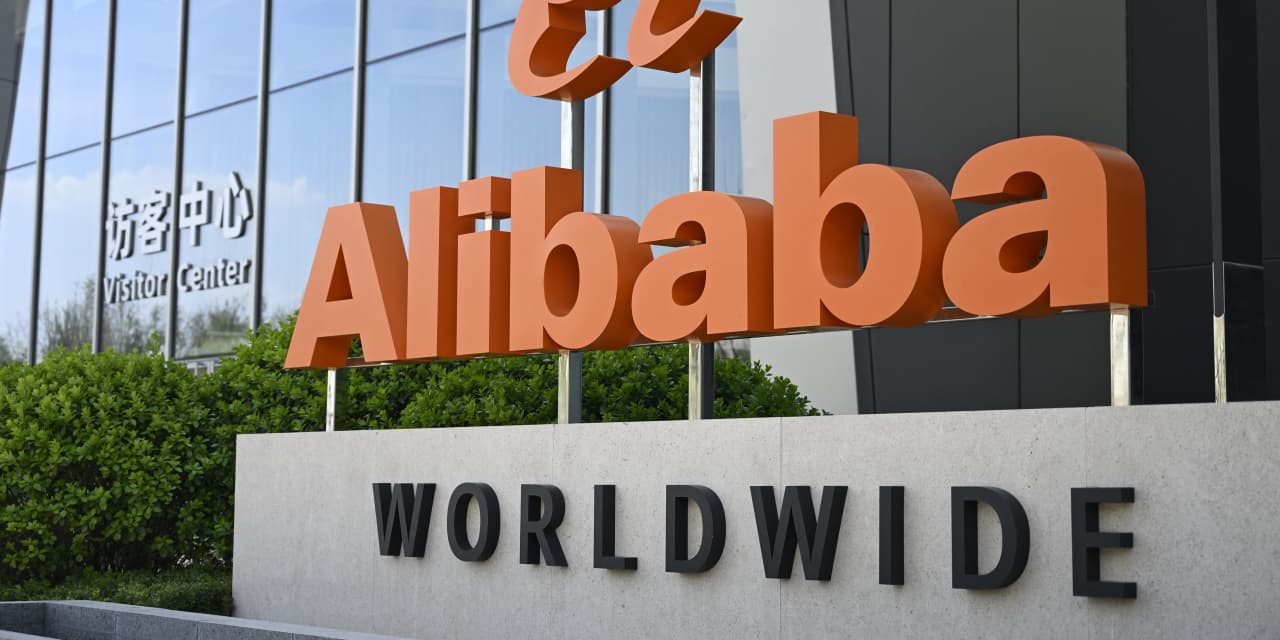
We bought BABA yesterday in MEMY, looks to be trying to bottom here and so far this morning up almost 9% in an ugly tape.
In Case You Missed It
Great conversation on wide ranging topics with Kenny Polcari…

The H.E.A.T. (Hedge, Edge, Asymmetry and Theme) Formula is designed to empower investors to spot opportunities, think independently, make smarter (often contrarian) moves, and build real wealth.
The views and opinions expressed herein are those of the Chief Executive Officer and Portfolio Manager for Tuttle Capital Management (TCM) and are subject to change without notice. The data and information provided is derived from sources deemed to be reliable but we cannot guarantee its accuracy. Investing in securities is subject to risk including the possible loss of principal. Trade notifications are for informational purposes only. TCM offers fully transparent ETFs and provides trade information for all actively managed ETFs. TCM's statements are not an endorsement of any company or a recommendation to buy, sell or hold any security. Trade notification files are not provided until full trade execution at the end of a trading day. The time stamp of the email is the time of file upload and not necessarily the exact time of the trades. TCM is not a commodity trading advisor and content provided regarding commodity interests is for informational purposes only and should not be construed as a recommendation. Investment recommendations for any securities or product may be made only after a comprehensive suitability review of the investor’s financial situation.© 2026 Tuttle Capital Management, LLC (TCM). TCM is a SEC-Registered Investment Adviser. All rights reserved.