
I’ve been a trader and investor for 44 years. I left Wall Street long ago—-once I understood that their obsolete advice is designed to profit them, not you.
Today, my firm manages around $4 billion in ETFs, and I don’t answer to anybody. I tell the truth because trying to fool investors doesn’t help them, or me.
In Daily H.E.A.T. , I show you how to Hedge against disaster, find your Edge, exploit Asymmetric opportunities, and ride major Themes before Wall Street catches on.
Table of Contents
H.E.A.T.

The AI bottleneck keeps moving. Compute was first. Memory was second. Now it's the highway between chips — and copper is hitting its frontier.
Every great technology boom has a moment where investors fixate on the obvious winner — and miss what quietly becomes the next constraint.
In 2020, every investor in America was fighting over GPU allocation. NVIDIA was the obvious trade, and it delivered — rewarding early holders with one of the most ferocious runs in semiconductor history. Then, as compute scaled, the bottleneck shifted. The new chokepoint wasn't processing. It was storage. High-bandwidth memory became the constraint that nobody had mapped. Micron doubled. SK Hynix exploded. The crowd, as always, arrived late.
Now the bottleneck has moved again. This time the constraint isn't compute. It isn't memory. It's the highway between chips. Specifically: the ability to move incomprehensible volumes of data between GPUs, across racks, and through the spine of a hyperscaler's data center — fast enough to keep a 100,000-GPU cluster from choking on itself.
Copper isn't dead. It still wins at very short reach, inside a rack, on short links. But beyond that comfort zone, the math stops working. Heat, signal degradation, repeaters, retimers, power draw — at the scale of next-generation AI infrastructure, copper's resistive losses become the dominant constraint on system design. The hyperscalers know it. The chip architects know it. The foundries building the next generation of AI infrastructure know it.
The answer is light. Photonics — the technology of transmitting data as pulses of laser light through fiber — isn't a futuristic concept. It's already inside every long-haul fiber network on earth. What's happening now is its migration inside the data center itself: onto circuit boards, into chip packages, and eventually directly onto the silicon die. The shift from copper interconnects to optical interconnects is one of the most consequential infrastructure transitions in the history of computing. And it's happening right now, largely out of sight of the financial media.
THE AI BOTTLENECK MIGRATION Phase 1 — Compute Bottleneck → Winner: $NVDA (+1,000%+ from 2022 lows) Phase 2 — Memory Bottleneck → Winners: $MU, SK Hynix (HBM cycle) Phase 3 — Interconnect Bottleneck → Winners: The photonics stack. Now. |
Why Light Wins: The Physics Argument
This isn't a story about hype. It's a story about physics. And physics doesn't negotiate.
A modern AI training cluster — say, Meta's 100,000-GPU installation — requires every GPU to communicate with every other GPU simultaneously, at bandwidths measured in terabits per second. Copper electrical signaling degrades at speed. It generates resistive losses proportional to data rate. It requires repeaters and retimers. At the scale of next-generation AI infrastructure, copper interconnects become the dominant source of power consumption and the single most constraining variable in cluster performance.
Fiber doesn't suffer resistive losses the way copper does. Yes, lasers and DSPs at the endpoints consume power — but optics wins the total system equation decisively as bandwidth and reach scale. A single optical fiber can carry multiple wavelengths of light simultaneously — wavelength-division multiplexing — dramatically multiplying effective bandwidth without adding physical cables. Silicon photonics, the technology of integrating optical components directly onto standard silicon wafers, is now mature enough to build transceivers that slot directly into the same rack infrastructure that currently uses copper.
Where | Technology | Status |
Inside-rack (short reach) | Copper still competitive | Copper holds — for now |
Rack-to-rack / pod / cluster | Optics is the default | Transition happening now |
Co-packaged optics (next wave) | Optics moves into the package | 2026–2028 inflection |
The hyperscalers — Amazon, Google, Microsoft, Meta — are not waiting for perfection. They are ordering optical transceivers at 800G and 1.6T speeds in quantities that suppliers describe as "sold out through 2028." That phrase deserves to be read carefully. In the semiconductor industry, a two-year backlog is a structural signal, not a temporary anomaly.
The Photonics Stack: Lightly Owned, Deeply Positioned
The photonics trade isn't one stock. It's a stack. Raw materials feed into chip fabrication. Chip fabrication feeds into transceiver assembly. Transceivers feed into data center infrastructure. The key insight — the one the market is still missing — is that each layer of that stack has a chokepoint, and most of those chokepoints are controlled by a small number of companies that sit entirely outside the usual megacap AI coverage universe.
We mapped this stack before institutional coverage arrived. Here's how it layers:
Ticker | Layer | Thesis | Type |
$SIVE / $SIVEF (OTC) | Lasers | Industry channels indicate laser supplier role for 1.6T transceivers into hyperscaler builds; management has discussed NASDAQ listing path; institutions just beginning to discover | Catalyst |
$AAOI | Transceivers | Vertically integrated — owns both transceivers and laser production; hyperscaler demand accelerating; Apr 30 earnings = key moment | Catalyst |
$AXTI | Materials | Indium Phosphide wafers — the upstream input no laser can exist without; most overlooked link in the chain | Upstream |
$COHR | Materials / Fab | Scaling advanced InP wafers; booked out years; exposure across multiple photonics growth vectors | Compounder |
$LITE | Transceivers | Appears sold out through 2028 per backlog disclosures; early co-packaged optics (CPO) orders — signal stock for sector | Catalyst |
$SOI | Silicon Wafers | Near-monopoly on SOI wafers required by every silicon photonics chip; strong IP moat; market still underpricing | Moat |
$TSEM | Foundry | Key silicon photonics foundry; scaling capacity against locked-in long-term demand | Infrastructure |
$SMSN.L (Samsung GDR) | Full Stack | Only player integrating memory + logic + packaging + photonics; trades cheap vs. peers; full-stack AI winner | Compounder |
$EWY (Korea ETF) | Memory / Korea | SK Hynix HBM exposure via Korea ETF; memory bottleneck still running; broad semiconductor coverage | Macro hedge |
SPOTLIGHT: $SIVE / $SIVEF (OTC) — THE LAST UNDISCOVERED CHOKEPOINT SiVeris Photonics sat entirely off the institutional radar until industry channels identified it as playing a laser supplier role for 1.6T transceivers going into hyperscaler data center builds. Management has discussed a NASDAQ listing path publicly. This isn't a rumor — it's a confirmed directional signal in one of the most strategically sensitive parts of the optical stack. The pending NASDAQ listing is the inflection catalyst. Institutional mandates require exchange listing for allocation. The moment that listing clears, a meaningful portion of the buy-side gets access for the first time. This is the window. Watch: NASDAQ listing date and any formal supply agreement disclosures. |
The Consensus Mistake (And Why It Keeps Repeating)
The market's error in each phase of the AI buildout has been identical: it maps the current bottleneck correctly but fails to anticipate where the next one forms. In 2021, the consensus was that software would be the constraint on AI. Wrong — compute was. In 2023, the consensus was that GPU supply would remain the constraint. Wrong — memory became co-equal. Now, the consensus is focused on the GPU clusters themselves.
What the consensus misses is that a 100,000-GPU cluster is only as fast as its slowest data pathway. You can have all the compute and memory in the world. If the interconnect can't keep up, the cluster performs like a highway with no exits. Copper still works at short reach — nothing kills it at the rack level tomorrow. But the profitable frontier is moving, and it's moving fast. Beyond short-reach, the power and heat math stops working at AI scale. The hyperscalers' own engineers figured this out 18 months ago. Their procurement departments are now acting on it.
The photonics stack is what the GPU stack looked like in 2021. Most of these companies are small. They sit outside the analyst coverage that reaches the top 50 asset managers. They are in the process of locking in supply agreements with the largest technology companies in the world. The disconnect between that commercial reality and their market capitalizations is what creates the opportunity.
Winners & Losers: The Photonics Transition
WINNERS | LOSERS |
Optical transceiver makers ($AAOI, $LITE) Confirmed hyperscaler demand, multi-year backlogs building, 1.6T wave just beginning InP wafer suppliers ($AXTI, $COHR) No InP means no lasers. Upstream suppliers to the entire photonics stack with no viable substitute material Silicon photonics foundries ($TSEM) Long-term capacity locked in; picks-and-shovels exposure to entire optical ecosystem SOI wafer monopolists ($SOI) Every silicon photonics chip needs SOI. This is a toll booth with a moat. Full-stack integrators ($SMSN.L) As AI scales in complexity, companies that own the full stack — memory through photonics — become indispensable partners | Copper interconnect suppliers Physics, not competition, is killing this market. The transition away from copper inside data centers is structural and irreversible Legacy networking hardware makers Companies built around electrical switching architectures face stranded investment as the optical migration accelerates Investors waiting for consensus The pattern has repeated three times in the AI buildout. By the time analyst coverage arrives, the easy money is gone Companies without supply agreements Hyperscalers are locking in optical supply years in advance. Companies not already in design wins will struggle to enter Over-leveraged fabless optical startups Execution risk is real. Only companies with confirmed production ramps and captive customers make it through the scale-up |
BEAR CASE: WHAT COULD GO WRONG 1. Hyperscaler capex pullback. If AI monetization disappoints and the hyperscalers cut 2026-2027 data center build plans, demand for optical transceivers compresses faster than supply backlogs can absorb. The 'sold out through 2028' narrative reverses quickly. 2. Technology substitution. Co-packaged optics (CPO) represents a more radical integration of lasers and compute that could disrupt standalone transceiver suppliers. Companies not positioned in CPO architectures risk displacement by their own customers. 3. Small-cap execution risk. Several names in this stack are sub-$1B market cap companies. Scaling from design win to production volume is where small cap photonics companies historically stumble. Position sizing matters. 4. Geopolitical supply chain risk. Indium Phosphide supply chains have geographic concentrations. Export controls, tariff escalation, or resource nationalism could disrupt upstream material flows in ways that are difficult to model. |
Five Things to Know This Week
1. | The AI bottleneck has moved to interconnects. Compute and memory are no longer the binding constraints on AI cluster performance. The new binding constraint is moving data between chips at sufficient speed and energy efficiency. Copper cannot solve this problem at scale. |
2. | Light is the answer, and the transition is already underway. Hyperscalers are not waiting for photonics to mature. They are purchasing 800G and 1.6T optical transceivers now, with multi-year backlogs forming at every layer of the supply chain. |
3. | The photonics stack runs deep — and most of it is unowned by institutions. From InP wafers to silicon photonics foundries to transceiver assemblers, the critical companies are small, underanalyzed, and in the process of confirming design wins with the largest technology companies in the world. |
4. | $SIVE/$SIVEF is the highest-asymmetry name in the stack. A confirmed laser design win for 1.6T transceivers combined with a pending NASDAQ listing represents the clearest near-term institutional catalyst in the entire photonics universe. This is the window before the buy-side gets access. |
5. | Watch $LITE as a signal stock for the entire sector. When a transceiver supplier describes itself as sold out through 2028 and shows early CPO orders, it's telling you something about demand that downstream earnings reports will confirm over the next four to six quarters. |
Space Exposure Designed For Potential Weekly Payouts
The space economy is no longer just a government program — it’s becoming part of a global industry that is gradually advancing.
But why view long-term growth as the only potential path forward?
SPCI seeks to offer approximately 100% concentrated exposure to the space industry while striving to generate weekly income through a disciplined put credit spread options strategy.
Gain exposure to the “final frontier” and a potential weekly distribution while you wait for the theme to play out.
Discover SPCI.
Distributor: Foreside Fund Services | Investing involves risk including possible loss of principle.
News vs. Noise: What’s Moving Markets Today
Once you realize it’s all nonsense it starts to make sense

THE NOISE
Oil dropped 9-11% Friday on Iran's "Strait is open" headline. Markets celebrated. The S&P popped. By Saturday morning, the IRGC had already taken it back, fired on tankers near Oman, and Iran's Parliament Speaker was on X calling Trump a liar. This is not a resolution. This is two parties leaking headlines to move markets while the actual negotiation hasn't happened yet. Talks "could" take place Monday in Pakistan. Iran "cast doubt" on their success. That's not a ceasefire. That's a press release.
THE SIGNAL
Here's what didn't change over the weekend: no new refineries got built. Global inventories are still depleted from six weeks of disruption. The crack spread is still sitting around $54 a barrel — three to four times its historical average — and that number doesn't care whether the IRGC opens or closes the strait on any given Saturday. Even with oil pulling back to the low $80s, refiners like VLO and MPC are printing money because the spread between crude input cost and refined product prices remains historically wide. The structural thesis here — no new U.S. refinery capacity since the 1970s, demand exceeding capacity by 400k barrels/day — was true before the war started and it'll be true after the peace deal gets signed. The geopolitical noise is masking what is really a supply infrastructure story that's been building for years. I still like buying oil and gas names on the dips.
This rally is shorts covering, not fundamentals improving. The IMF lowered its global growth outlook. NFIB small business sentiment deteriorated in March. Industrial production missed. The consumer is holding — but increasingly bifurcated. That's not a bull market catalyst. That's a fragile backdrop getting papered over by a geopolitical sigh of relief.
While everyone was trading the ceasefire headline, the memory cycle quietly screamed. South Korea DRAM exports +265% Y/Y in March with pricing up 162%. NAND exports +380% Y/Y. The first 10 days of April came in at +152% Y/Y — right on pace. This isn't a blip. This is a supercycle in early innings. Hynix reports Wednesday and the setup is robust ASPs, expanding margins, and the HBM4/HBM3E roadmap. Semi cap WFE estimates keep moving up — now 25%+ for CY26, 20% for CY27 — with 12+ months of shipment visibility. LRCX and ICHR are the names most levered to where the incremental spend is going. CRDO's acquisition of DustPhotonics and a >$500M optical revenue target for FY27 at 75% growth — well ahead of what the Street had modeled — is the kind of data point that gets buried in a geopolitical news cycle. It shouldn't be.
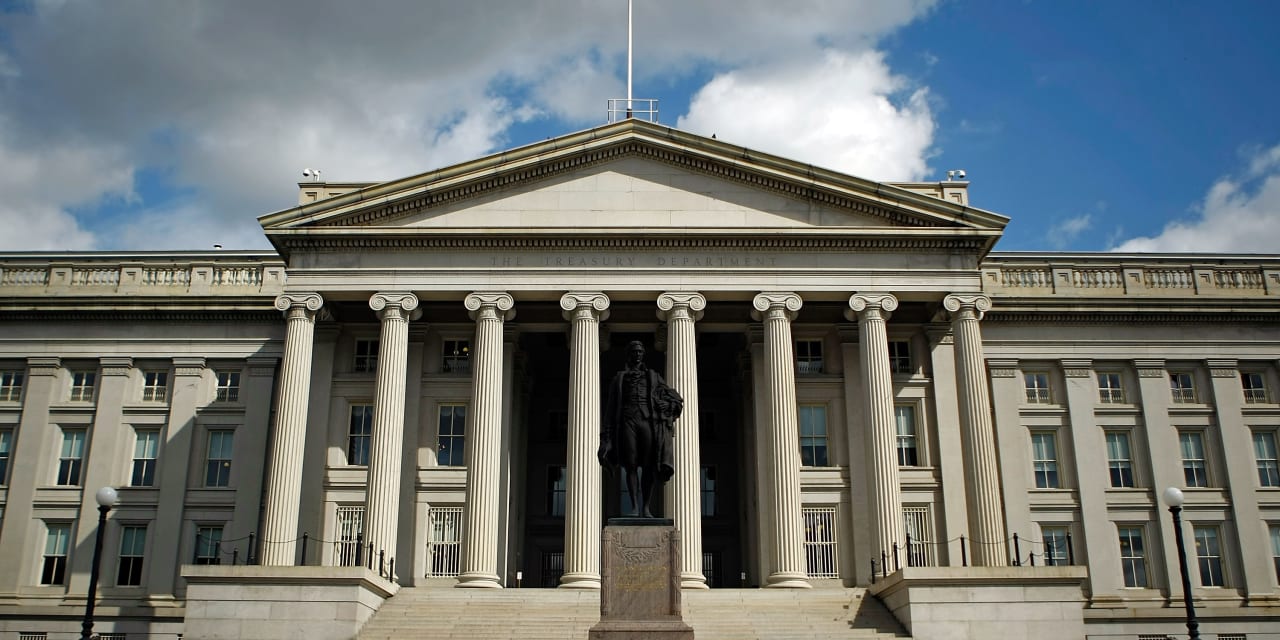
On Friday I pointed out that Hank Paulson’s warning on Treasuries, this could also be an issue…..
What Iran Tells Us About UFO Disclosure
When governments confront unknown threats in their airspace, defense budgets surge
and the same aerospace and surveillance companies move hardest. On March 2nd,
Northrop jumped 6% and Lockheed 3.3% on the Iran news — and President Trump has
since ordered the formal release of government UAP files, with the Pentagon confirming
compliance. So if a conventional conflict can move these stocks this fast, what happens
when the bigger story breaks?
See the UFOD holdings: [thetruthisoutthereufod.com
ETF News
$MEMY Holdings Update:
We replaced $INFQ ( ▼ 1.41% ) and added $AA ( ▲ 2.13% ) All 5% positions.
For a full list of MEMY holdings, visit:
https://incomeblastetfs.com/etf/memy
Distributor: Foreside Fund Services, LLC
A Stock I’m Watching

They are able to use natural gas from the US and sell higher priced fertilizer. Would want to see an undercut and rally at the 50 day.

In Case You Missed It

The H.E.A.T. (Hedge, Edge, Asymmetry and Theme) Formula is designed to empower investors to spot opportunities, think independently, make smarter (often contrarian) moves, and build real wealth.
The views and opinions expressed herein are those of the Chief Executive Officer and Portfolio Manager for Tuttle Capital Management (TCM) and are subject to change without notice. The data and information provided is derived from sources deemed to be reliable but we cannot guarantee its accuracy. Investing in securities is subject to risk including the possible loss of principal. Trade notifications are for informational purposes only. TCM offers fully transparent ETFs and provides trade information for all actively managed ETFs. TCM's statements are not an endorsement of any company or a recommendation to buy, sell or hold any security. Trade notification files are not provided until full trade execution at the end of a trading day. The time stamp of the email is the time of file upload and not necessarily the exact time of the trades. TCM is not a commodity trading advisor and content provided regarding commodity interests is for informational purposes only and should not be construed as a recommendation. Investment recommendations for any securities or product may be made only after a comprehensive suitability review of the investor’s financial situation.© 2026 Tuttle Capital Management, LLC (TCM). TCM is a SEC-Registered Investment Adviser. All rights reserved.