
I’ve been a trader and investor for 44 years. I left Wall Street long ago—-once I understood that their obsolete advice is designed to profit them, not you.
Today, my firm manages around $5 billion in ETFs, and I don’t answer to anybody. I tell the truth because trying to fool investors doesn’t help them, or me.
In Daily H.E.A.T. , I show you how to Hedge against disaster, find your Edge, exploit Asymmetric opportunities, and ride major Themes before Wall Street catches on.
Table of Contents
H.E.A.T.
€43B–€45B ASML FY26 sales guide, raised from €36B–€40B | NT$1.27T TSMC Q2 revenue; profit up 77% YoY | $60B-$64B TSMC raised 2026 capex budget | $265B TSMC total committed U.S. investment |
The AI trade just got its cleanest stress test of the year.
Not from OpenAI. Not from Nvidia. Not from another hyperscaler promising to spend more money than anyone thought possible. It came from two companies that do not sell dreams. One sells the machine that makes the advanced chip possible. The other sells the wafer capacity that turns that design into physical compute. One is the chokepoint in lithography. The other is the chokepoint in advanced manufacturing. Within roughly a day of each other, both told the market the same thing.
The AI buildout is not slowing. It is moving deeper into the physical supply chain.
ASML raised 2026 sales guidance from €36 billion–€40 billion to €43 billion–€45 billion and lifted gross-margin guidance to 54%-56%. TSMC followed with a 77% year-over-year profit jump, NT$1.27 trillion of quarterly revenue, third-quarter revenue guidance of $44.6 billion-$45.8 billion, full-year growth guidance now above 40%, and a 2026 capex budget raised to $60 billion-$64 billion. Then came the real tell: another $100 billion for Arizona, bringing TSMC's total committed U.S. investment to $265 billion.
That is not hype. That is concrete, steel, clean rooms, EUV capacity, advanced packaging, power contracts, and years of customer commitments.
The market wanted a clean answer to the AI capex panic. It just got one. But the answer is not "buy every AI stock." The answer is more precise: the physical buildout is real, and the market is now going to separate true bottlenecks from crowded proxies.
BOTTLENECK MIGRATION The binding constraint in AI keeps moving - from GPUs, to HBM, to power, to packaging - and this week it landed on the two links that see future orders years before the chip exists: the tool that prints the wafer and the foundry that turns the print into product. |
PART I: THE NUMBERS
Two companies, two different earnings reactions, one identical message underneath. ASML beat, raised the entire full-year sales range, lifted gross-margin guidance, and made clear that scarcity is giving it pricing power. TSMC then posted record profit and revenue, guided the next quarter higher, raised full-year growth expectations, and lifted capex again.
The mix matters as much as the numbers. Advanced technologies at 7nm and below accounted for 77% of TSMC wafer revenue. HPC was roughly two-thirds of platform revenue. This is no longer a consumer electronics cycle with some AI attached to it. AI and high-performance computing are now the center of gravity.
And yet both prints came with friction. Some desks called ASML's capacity plan underwhelming because expectations had already moved too far. TSMC's ADRs fell even after the beat because investors are now focused on capex intensity, overseas-fab dilution, and whether trillions of dollars of AI spending eventually earn back their cost of capital. That is the new regime: demand is not the question anymore. Return on demand is.
PART II: THE ORDER BOOK
What makes this pairing more powerful than either report alone is where the confirmation sits in the supply chain. Cloud providers can talk about clusters. Chip designers can talk about roadmaps. ASML and TSMC see the physical commitments years before the chips exist.
The lithography side is approaching booked-out EUV capacity for next year and already has meaningful 2028 visibility. The foundry side is committing hundred-billion-dollar sums to Arizona, 2nm production, and advanced packaging capacity. Nobody writes those checks for a one-quarter fad. This is the AI capex cycle hardening into industrial infrastructure.
TOLLBOOTH ECONOMICS It does not matter which accelerator wins the design race if every leading-edge chip still passes through the same two chokepoints before it exists. That is what a tollbooth looks like on a balance sheet: volume rises, price rises, and customers still line up because there is no equivalent route around it. |
PART III: WHO THIS VALIDATES
The read-through fans out in four directions. First, the AI accelerator ecosystem - Nvidia, Broadcom, AMD, Apple and the custom-silicon complex - gets its demand backdrop reconfirmed. But it is not costless validation. A foundry and a lithography supplier with real pricing power are also input-cost pressure for everyone downstream.
Second, advanced packaging and process control. TSMC is not only building logic fabs; it is building the packaging, inspection, metrology, and test infrastructure that turns accelerators into usable AI systems. The bottleneck is no longer just transistor density. It is package density, CoWoS-class capacity, hybrid bonding, and yield.
Third, memory and power. Neither report weakens the HBM thesis. AI logic and AI memory demand are rising together, and the same buildout that lifts TSMC also lifts the power, grid, clean-room, gas, water, and fab-infrastructure stack around it.
Fourth, ROI software. ASML and TSMC prove the AI infrastructure buildout is real. They do not prove every downstream business model works. The next equity-market question is where this capacity turns into productivity, lower cost-to-serve, fraud reduction, workflow automation, and labor substitution.
CATEGORIES ARE LYING Wall Street still talks about AI chips as one basket. This week the confirmation came from a Dutch lithography monopoly and a Taiwanese foundry committing $265B to U.S. capacity. That is not one company hyping demand. That is the supply chain confirming the cycle from opposite ends of the stack. |
PART IV: THE CRACKS
None of this removes the risk from the trade. Four cracks are worth naming plainly.
First, price and expectations. Both companies beat, and both still drew skepticism because expectations across this entire corner of the market have climbed to a level where "merely excellent" no longer moves the stock. Second, overseas-fab economics. A $265 billion Arizona commitment lowers geopolitical concentration risk and moves capacity closer to key customers, but non-home-market fabs are structurally more expensive to operate and depreciate.
Third, China. ASML can validate the global buildout while still facing policy risk in DUV tools, service, and China customer mix. Fourth, hyperscaler ROI. The chip supply chain just proved it will keep building. It did not prove that Meta, Google, Microsoft, Amazon, or Oracle earn attractive returns on every dollar they spend.
That is the investment distinction. ASML and TSMC validate the physical AI cycle. They do not validate every AI multiple. The winners are the bottlenecks. The losers are the proxies.
WINNERS & LOSERS
Company / Sector | Verdict | Why It Matters | Risk |
ASML Holding (ASML) | VALID | Raised FY26 sales guidance to €43B–€45B and gross-margin guidance to 54%-56%; EUV capacity remains the cleanest monopoly bottleneck in advanced semiconductors. | The business is excellent, but the stock already embeds a lot of that excellence. China/DUV policy exposure remains a wildcard. |
Taiwan Semiconductor (TSM) | CONFIRM | Profit up 77% YoY, Q2 revenue of NT$1.27T, Q3 guide of $44.6B-$45.8B, 2026 capex raised to $60B-$64B, and U.S. investment lifted to $265B. | ADRs fell despite the beat; overseas-fab economics and capital intensity are now the margin battleground. |
AI accelerator designers (NVDA, AVGO, AMD, AAPL) | VALID / COST | The foundry print reconfirms leading-edge demand for GPUs, custom ASICs, CPUs, and premium mobile silicon. | A supplier with pricing power is also an input-cost problem. Strong customers can pass it through; weaker ones cannot. |
Advanced packaging & process control (AMKR, ASX, BESI, ONTO, CAMT, FORM, KLAC) | TAILWIND | TSMC's expansion is also a CoWoS, hybrid-bonding, inspection, test, and metrology buildout. AI bottlenecks are moving from transistor density to package density. | Second-order exposure. Real benefit, but less structurally protected than EUV or leading-edge foundry capacity. |
Broader semicap equipment (AMAT, LRCX, TEL, ASMI, SCREEN) | INDIRECT | A multiyear fab buildout supports etch, deposition, cleaning, and process-control demand beyond lithography alone. | More competitive than ASML and more exposed to timing of capex cycles. |
Memory leaders (SK Hynix, Micron, Samsung) | TAILWIND | AI logic and AI memory demand are rising together. HBM scarcity and conventional DRAM tightness remain part of the same buildout. | Memory cycles can reverse when supply lands; CXMT and China localization complicate the terminal multiple. |
Intel (INTC) | PROCESS WIN | Early High-NA EUV use on specific Panther Lake layers gives Intel a rare process-technology credibility point. | Still no proof Intel has won commercial foundry leadership. TSMC still holds the marquee customer relationships. |
Power & fab infrastructure (PWR, ETN, GEV, VRT, HUBB, NVT, POWL) | PICKS | A $265B U.S. buildout is a construction, power, grid, clean-room, gas, water, and switchgear story as much as a chip story. | Valuations have already re-rated on the same physical-AI thesis. |
AI-ROI software (NOW, CRM, PLTR, SNOW, DDOG, PANW, CRWD, OKTA) | ROI LAYER | ASML and TSMC prove the infrastructure spend is real; software proves whether that spend turns into labor savings and operating leverage. | Evidence is early and uneven; seat-based software and point tools still face disruption. |
WATCH YOUR FOOTING
Risk | Verdict | Why It Matters | Risk Detail |
Valuation entry price (ASML, TSMC) | PRICE RISK | Both businesses just validated the cycle, but both stocks have already absorbed a lot of the good news. | A stock falling on a beat is often a valuation signal, not a demand signal. |
Generic AI hardware proxies | RENTED BETA | The root buildout is real; that does not rescue every optics, neocloud, rack-OEM, or GPU-leasing stock that traded on AI exposure alone. | The market is separating bottleneck ownership from beta rental. |
Hyperscaler capex ROI (META, GOOGL, MSFT, AMZN, ORCL) | ROI RISK | The chip supply chain is proving it will keep building. That does not prove AI capex earns back its cost of capital. | If capex keeps outrunning AI-linked revenue, multiples remain vulnerable. |
Low-margin AI assemblers (SMCI, DELL, HPE) | MARGIN RISK | Volume can still grow, but upstream suppliers with pricing power and tight memory markets compress downstream economics. | Unit growth is not the same as margin capture. |
Consumer and price-sensitive semis | MIX RISK | AI/HPC demand is strong, but smartphones, PCs, consumer electronics, and low-end analog remain more exposed to affordability and memory inflation. | The AI boom can coexist with weakness in non-AI silicon. |
China policy exposure | EVENT RISK | ASML still has China/DUV exposure while U.S. and allied export-control regimes remain fluid. | Guidance can be conservative one year and derailed by policy the next. |
Overseas-fab margin dilution | MARGIN DEBATE | U.S. capacity lowers geopolitical concentration risk and brings supply closer to key customers. | Arizona and other overseas fabs carry higher cost and depreciation; the dilution shows up gradually. |
PRESSURE POINTS
Pressure Point | What to Watch | Time Horizon |
Realized ASML pricing power | Whether management's stated room to raise prices shows up in average selling prices and gross margin over the next few reports. | Next 1-3 quarters |
TSMC overseas-fab economics | Depreciation, utilization, and gross-margin dilution from Arizona and other non-Taiwan fabs as they ramp. | 2026-2028 |
Advanced packaging capacity | CoWoS-class, hybrid-bonding, substrate, and test capacity relative to accelerator demand. | 2026-2028 |
Hyperscaler capex-to-AI-revenue ratio | Whether AI product revenue at the largest cloud spenders begins catching up to capital spend. | Through 2027 |
China export controls | Restrictions on DUV tools, service, spare parts, and China customer access. | Ongoing - event-driven |
CREDIBILITY FIREWALL
Sourced / Reported | Modeled / Inferred | Editorial View |
ASML FY26 sales guidance raised to €43B–€45B; gross-margin guidance raised to 54%-56%; management commentary indicates pricing power. | A full-range guide raise implies confidence in the demand floor, not merely upside optionality. | This is a stronger tell than a normal beat-and-raise because ASML sees capacity commitments years ahead. |
TSMC Q2 revenue of NT$1.27T, net income of NT$706.6B, Q3 revenue guidance of $44.6B-$45.8B, 2026 capex raised to $60B-$64B. | Full-year growth above 40% implies management expects AI/HPC to keep expanding as a share of total revenue. | The capex raise matters as much as the profit beat because it is a forward commitment, not backward-looking strength. |
TSMC announced an additional $100B for Arizona, bringing total committed U.S. investment to $265B. | Treat this as evidence that customers want advanced capacity and packaging closer to U.S. demand, not just policy compliance. | The geopolitical benefit is real; the margin cost is also real. |
TSMC ADRs fell despite the beat; some ASML commentary called capacity expansion underwhelming after a large stock move. | The market is distinguishing demand validation from entry-price attractiveness. | A stock can fall on great news when expectations have already moved to perfection. |
Reports highlight China exposure, export controls, and overseas-fab dilution as ongoing risks. | These are not thesis breakers; they are the variables that decide how much of the physical buildout converts into equity upside. | The buildout is real. The multiple is the debate. |
BEAR CASE: WHY THIS COULD BE NOISE
BEAR CASE SPOTLIGHT Both companies beat. Both raised guidance. And in both cases, the market still found reasons to be cautious. That is not a demand problem; it is an expectations problem. The bear case is that ASML and TSMC validate the physical cycle but not the stocks from here: overseas fabs dilute margins, China policy reduces visibility, hyperscalers slow if AI revenue lags capex, and investors stop paying a premium for second-order proxies. In that world, the buildout continues while the equity leadership narrows. |
FIVE THINGS TO DO WITH THIS INFORMATION
1. Separate buildout proof from entry price. ASML and TSMC validate the physical AI cycle. They do not guarantee that every AI-linked stock deserves a higher multiple from here.
2. Own bottlenecks before proxies. EUV lithography, advanced foundry capacity, advanced packaging, process control, HBM, and power delivery sit closer to the scarce input than optical beta, GPU-leasing, or rack-assembly stories.
3. Track realized pricing power and margin dilution. Watch ASML average selling prices and TSMC overseas-fab depreciation. Strategic capacity and near-term margin pressure can both be true.
4. Monitor hyperscaler capex-to-AI-revenue ratios. The chip supply chain is proving willingness to build. The market still needs proof that customers monetize the capacity.
5. Use the software rebound selectively. The best downstream AI plays are systems of record, workflow engines, security, observability, and cost-governance platforms that can prove ROI - not every SaaS name with an AI button.
The longest-running theft in American history?
Porter Stansberry's argument: when new money is printed, the dollars you already hold
quietly lose purchasing power, a "theft" you never see on any statement. Whether or not
you agree, the Porter & Company Porter Portfolio Index ETF (PCPP) was built for
investors who'd rather hold a diversified mix than sit in cash. It tracks a rules-based index
split roughly four ways: P&C insurers, capital-efficient equities, hard assets, and
short-term fixed income.
Investing involves risk including possible loss of principal.
Read the prospectus at porterandcofunds.com.
Consider the fund's investment objectives, risks, charges, and expenses carefully before
investing. This and other information are in the prospectus at PorterandCoFunds.com or (833)759-6110; read it carefully before investing. Investing involves risk, including possible loss of principal. PCPP is new and non-diversified. Distributed by Foreside Fund Services, LLC.
News vs. Noise: What’s Moving Markets Today
The semi’s tried to rally, then tried to sell off, and ended up really doing neither yesterday. Today SMH looks to open below it’s 50 day moving average, not a great sign……

QQQs also look to open below the 50 day moving average, also a short signal….

I’d continue to be adding to hedges on any pop. Again, I’m not saying this is THE top, I am saying that the risk/reward if not great here. If cooler than expected CPI and PPI didn’t change the narrative, not sure what does.
I have to think this is important, but not sure quite how yet, and what impact it may have, if any….

The news. The market has declared the July hike dead. Maybe. Soft CPI and PPI pushed the implied chance of a July move down to 10% from 43% earlier this month. The 2-year Treasury fell 14 basis points in two days, then traded near 4.15%. But Brent is still around $84.50 and up 11% this week. Warsh told markets to “play the ball, not the Fed.” Half of his colleagues still expect a hike by year-end, and Governor Lisa Cook says she is prepared to act if disinflation stalls. One soft month can take July off the table. It does not cancel the regime. Less guidance makes every new data point more important, not less. (Reuters — markets, inflation and yields, Reuters — Warsh and the divided Fed)
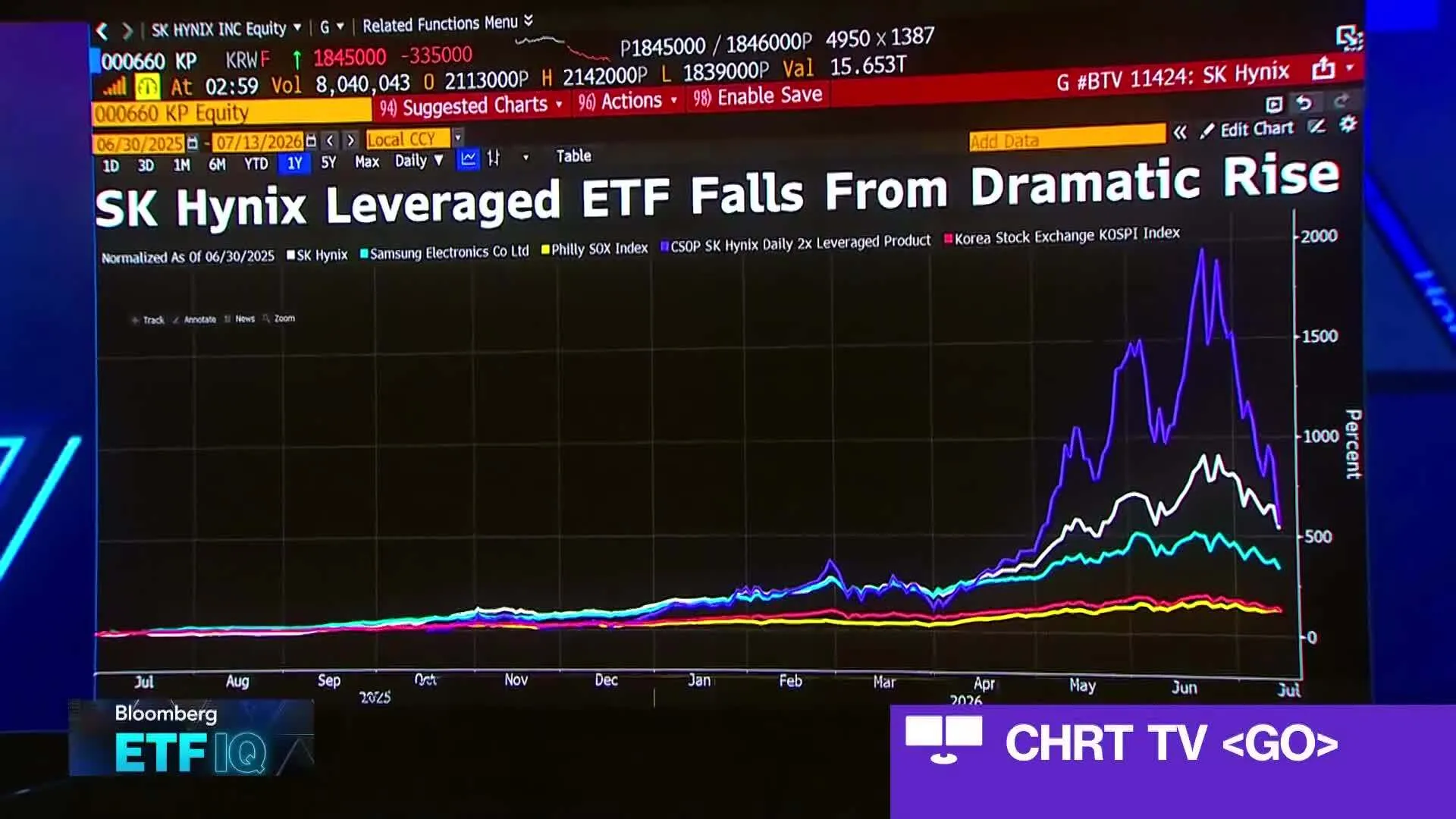
The noise. The noise is that great AI earnings automatically mean higher chip stocks. TSMC just reported a 77% jump in quarterly profit to a record $22 billion. South Korea’s KOSPI still fell 6.2%. Samsung lost 6.6%. SK Hynix lost 9%. The KOSPI is now 27% below its June peak. JPMorgan’s trading desk could not point to a negative headline. The bar was simply too high. Meanwhile, New York became the first state to impose a statewide moratorium on new data centers using 50 megawatts or more, citing utility bills and natural resources. This is bottleneck migration again. AI demand is real. So are crowded positioning, power limits, permits, and politics. The technology can work and the trade can still break. (Reuters — TSMC earnings, Reuters — Asian chip selloff, Reuters — New York data-center moratorium)
The dumb advice. The dumb advice is MarketWatch declaring that “it’s a buyer’s market for bonds.” The author said the best reason to buy was that institutional managers do not want them. That is not a thesis. It is contrarianism without regime analysis. The 30-year Treasury is still around 5.10%. Oil is up 11% this week. Inflation remains above the Fed’s target, and half the committee still expects a hike this year. T-bills can reduce portfolio risk. Broad bond funds are a duration bet. Buying them because professional managers are underweight is how investors confuse being different with being right. (MarketWatch — “It’s a buyer’s market for bonds”, MarketWatch — Treasury yields, AP — Warsh and inflation)
Concrete takeaways.
July hike risk fell. Year-end hike risk did not disappear.
Watch the 2-year and oil. Ignore the comfort of the dot plot.
TSMC confirms the AI buildout. Korea confirms the trade is crowded.
The memory supercycle can be real and still suffer violent unwinds.
Power, permits, and public consent are becoming AI earnings variables.
Use T-bills and short duration for defense.
Do not buy broad bonds merely because institutions hate them.
ETF News

A Stock I’m Watching

I talked about $BABA ( ▼ 1.68% ) the other day, today is $BIDU ( ▼ 1.91% ). Undercut and rally at the April lows and nicely green this morning so far in a red tape. The Chinese tech stocks are probably the most interesting area of the market to me at the moment.
In Case You Missed It
Great conversation on wide ranging topics with Kenny Polcari…

The H.E.A.T. (Hedge, Edge, Asymmetry and Theme) Formula is designed to empower investors to spot opportunities, think independently, make smarter (often contrarian) moves, and build real wealth.
The views and opinions expressed herein are those of the Chief Executive Officer and Portfolio Manager for Tuttle Capital Management (TCM) and are subject to change without notice. The data and information provided is derived from sources deemed to be reliable but we cannot guarantee its accuracy. Investing in securities is subject to risk including the possible loss of principal. Trade notifications are for informational purposes only. TCM offers fully transparent ETFs and provides trade information for all actively managed ETFs. TCM's statements are not an endorsement of any company or a recommendation to buy, sell or hold any security. Trade notification files are not provided until full trade execution at the end of a trading day. The time stamp of the email is the time of file upload and not necessarily the exact time of the trades. TCM is not a commodity trading advisor and content provided regarding commodity interests is for informational purposes only and should not be construed as a recommendation. Investment recommendations for any securities or product may be made only after a comprehensive suitability review of the investor’s financial situation.© 2026 Tuttle Capital Management, LLC (TCM). TCM is a SEC-Registered Investment Adviser. All rights reserved.