
I’ve been a trader and investor for 44 years. I left Wall Street long ago—-once I understood that their obsolete advice is designed to profit them, not you.
Today, my firm manages around $4 billion in ETFs, and I don’t answer to anybody. I tell the truth because trying to fool investors doesn’t help them, or me.
In Daily H.E.A.T. , I show you how to Hedge against disaster, find your Edge, exploit Asymmetric opportunities, and ride major Themes before Wall Street catches on.
Table of Contents
H.E.A.T.
Uber’s CEO must be reading my newsletter. Part of the thematic investment hierarchy that we teach is you also want to be in any companies using new technology to potentially increase profits and/or reduce costs…….
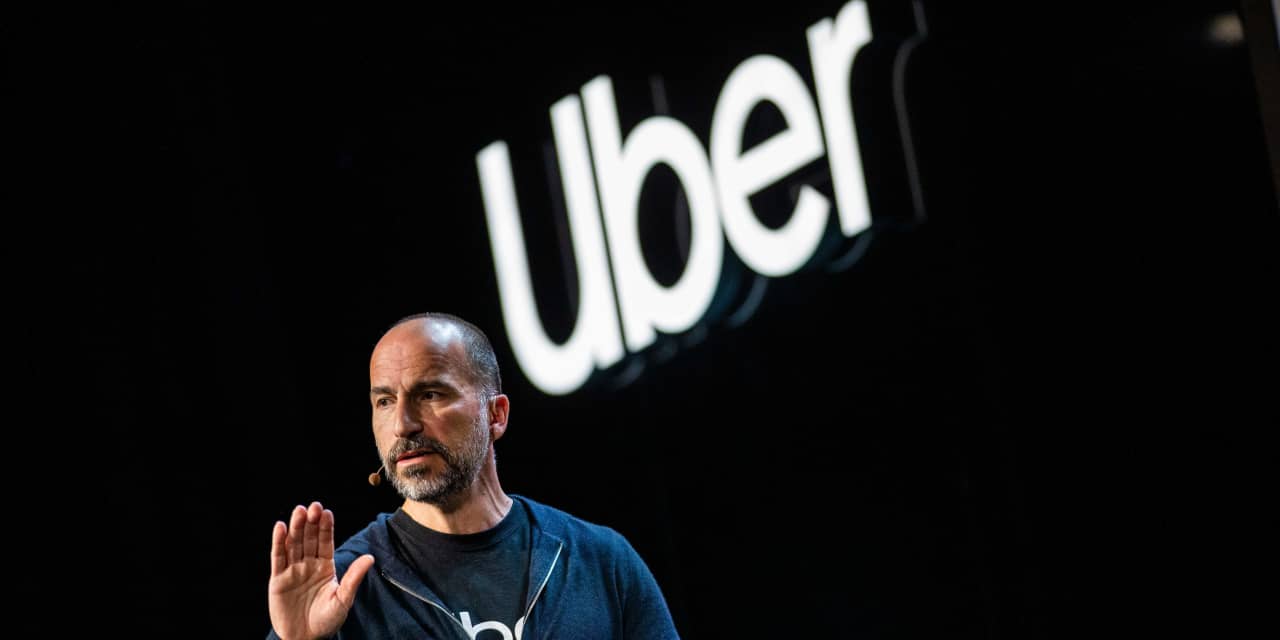
At Davos, Uber CEO Dara Khosrowshahi basically handed investors a cheat code: avoid companies that slap an AI layer on top of the same old process. That’s not transformation — it’s marketing. The real winners, he argues, are the ones willing to break their existing workflows, rebuild them with AI from the ground up, and let the new system rewrite the rules. This matters because we’re moving into the next phase of the AI cycle: less “benchmarks and buzzwords,” more “prove it in the P&L.” The market is already paying for aggressive AI growth assumptions in a lot of places. The setup for 2026 is that valuation will increasingly follow execution, and execution means measurable outcomes: lower cost-to-serve, higher conversion, faster cycle times, fewer humans needed per unit of growth.
Uber is a clean example of what “real adoption” looks like because it’s not a chatbot company — it’s a massive real-time logistics marketplace. If you can improve matching, routing, fraud prevention, customer support, and marketplace pricing with AI, you don’t just get a nice demo… you get structural margin expansion. And Uber has a second (and underappreciated) angle: autonomy distribution. Uber’s long game is to be the demand layer — the “network + app” that routes riders to whatever supply is cheapest/best, including robotaxis. They’ve partnered with a long list of autonomous vehicle players, which is a strategic tell: Uber doesn’t need to “win autonomy” to win the economics. If robotaxis grow, Uber can become the toll collector on autonomous miles in the same way it became a toll collector on human-driven miles.
What This Foreshadows for AI in 2026
AI is shifting from “tools” to “operators.” The next wave is autonomous agents that don’t just answer questions — they complete workflows. That changes the scoreboard for investors:
The winners won’t be the companies with the slickest AI feature.
The winners will be the companies that delete steps, remove labor, compress cycle time, and turn time saved into either higher throughput (revenue) or lower headcount (margin).
The market is going to punish “AI theater” harder, because AI spending is now big enough that investors want evidence, not intention.
This is also why you’re seeing “AI fear” hit parts of software: if an agent can complete a workflow end-to-end, point-solution software starts to look like a feature, not a product. But the important nuance is: that doesn’t mean “software dies.” It means software is being forced to evolve into platform + data + permissions + guardrails (and charge for outcomes, not seats). The best incumbents can absolutely survive — but the lazy ones won’t.
The “Real AI Winner” Checklist (Steal This)
When management says “we’re using AI,” here’s what matters:
Do they control the workflow? (If they don’t, AI is just a plug-in.)
Do they have proprietary data at scale? (Models commoditize — data + distribution don’t.)
Is there a clear unit economics target? (Cost per ticket, cost per claim, cost per shipment, etc.)
Can they measure it quarterly? (If the benefits can’t show up in KPIs, it’s probably theater.)
Are they rebuilding systems, not bolting on features? (The “start over” tell is everything.)
Do they have “AI risk” controls? (Agents need identity, permissions, audit trails, security.)
Winners, Losers, Second-Order Winners (with tickers)
Winners: “AI that changes the business”
UBER — Applied AI + autonomy distribution option. Marketplace efficiency + potential to monetize autonomous miles without building the cars.
GOOG / GOOGL — Autonomy leadership via Waymo gives Alphabet a direct seat at the “physical AI” table.
NVDA — Still the picks-and-shovels backbone for autonomy + physical AI compute.
Second-order winners: “the guardrails and plumbing for agents”
If agents actually touch real systems (files, payments, workflows), security and control become non-negotiable:
CRWD — Endpoint + identity-adjacent security as AI agents expand the attack surface.
PANW — Platform security for a world where workloads + agents are everywhere.
FTNT — Network/security infrastructure as enterprise traffic complexity rises.
OKTA — Identity permissions become the “keys to the kingdom” in an agent-driven enterprise.
Losers: “AI veneer” risk (and where sentiment can stay ugly)
These aren’t automatic shorts — but they’re headline-vulnerable until they prove an agent-first roadmap and durable pricing power:
CRM — If the workflow value shifts from seats to outcomes, pricing models get pressured.
NOW — Same issue: the agent layer can compress point-solution value unless NOW becomes the control plane.
ADBE — AI compresses some creative workflows; winners will be the ones monetizing outcomes, not features.
MNDY — Lightweight workflow apps are most exposed to “agent replaces the UI” narratives.
(Again: some of these can absolutely win long-term — the point is the market is punishing ambiguity right now.)
Takeaways
Stop asking “who has AI?” Start asking “who is rebuilding operations around AI?”
The best AI adopters will show it in unit economics, not press releases: faster fulfillment, fewer support touches, lower fraud, higher conversion, better utilization.
Platform + data + distribution beats point solutions in an agent world.
If you want to stay hedged, barbell it: own (1) infrastructure winners (compute/security) and (2) applied-AI operators (marketplaces/logistics), while keeping exposure controlled to “AI theater” names that can get hit on the next scary headline.
Non-AI Companies That Fit the “Real AI Winners” Model
1) Logistics: AI turns miles + minutes into margin
UPS (UPS)
AI wedge: route optimization, demand forecasting, labor scheduling, network flow
Why it matters: tiny efficiency gains scale across a massive cost base
Watch for: sustained margin improvement without a perfect macro
FedEx (FDX)
AI wedge: network optimization + automation + exception handling (the expensive part of shipping)
Why it matters: FedEx is basically a machine made of variables — AI thrives on variables
Watch for: mix shift + service quality improvements + fewer “cost to serve” surprises
2) Retail: AI is a pricing + inventory edge (and an ad business kicker)
Walmart (WMT)
AI wedge: inventory productivity, shrink reduction, fulfillment optimization, personalization
Why it matters: if you can reduce waste and stock-outs at scale, you print cash
Watch for: margin stability despite wage pressure and messy consumer demand
Costco (COST)
AI wedge: demand forecasting, supply chain smoothing, member personalization without breaking the Costco trust model
Why it matters: Costco’s model is already elite — AI is incremental perfection
Watch for: improved turns / fewer out-of-stocks without margin “creep”
3) Travel: AI monetizes intent + reduces customer service cost
Booking (BKNG)
AI wedge: conversion optimization, personalization, fraud reduction, customer support automation
Why it matters: travel is high intent + high margin + high fraud — perfect AI terrain
Watch for: higher conversion and attachment (insurance, add-ons) with lower service cost
Delta (DAL) (also works with UAL as a category)
AI wedge: disruption recovery (IRROPS), crew scheduling, predictive maintenance, dynamic pricing
Why it matters: airlines leak money through irregular operations — AI plugs leaks
Watch for: fewer operational blowups → better unit economics → multiple expansion
Mastercard (MA) / Visa (V)
AI wedge: fraud detection, authorization uplift, network security, smarter routing
Why it matters: tiny changes in approval rates and fraud losses are huge dollars
BUT: in your current “affordability / Washington picks winners” regime, payments are politically sensitive
Watch for: policy headlines (fees) vs fundamentals (volume + risk metrics)
5) Banks: AI is a cost-out + risk control machine
JPMorgan (JPM)
AI wedge: fraud, credit underwriting, compliance automation, internal productivity (ops + code)
Why it matters: banks are paperwork factories — AI attacks paperwork
Watch for: efficiency ratio improvement + stable credit quality = “quiet compounding”
Capital One (COF) (higher risk, higher operating leverage)
AI wedge: underwriting, fraud, collections, marketing optimization
Why it matters: if AI improves credit decisioning, COF’s model gets sharper
BUT: subject to the credit-card APR cap headline risk
Watch for: how Washington pressure actually translates into rules (or doesn’t)
6) Industrials: AI turns downtime into uptime (and uptime into pricing power)
Deere (DE)
AI wedge: computer vision + autonomy + precision ag (inputs optimization)
Why it matters: ROI is measurable (fuel, fertilizer, yield) — farmers don’t buy “AI vibes”
Watch for: subscription / software attach + autonomous adoption curve
Caterpillar (CAT)
AI wedge: predictive maintenance, fleet optimization, automation in heavy equipment
Why it matters: downtime is the tax in construction/mining — AI reduces the tax
Watch for: services revenue + automation penetration
7) Healthcare services: AI reduces admin drag (the biggest hidden cost center)
UnitedHealth (UNH) (headline risk exists, but the model fits)
AI wedge: claims automation, care navigation, billing/admin efficiency
Why it matters: healthcare is admin-heavy; “real AI” means fewer touches per claim
Watch for: Washington rhetoric vs actual policy mechanics (this sector is always in the crosshairs)
CVS (CVS)
AI wedge: pharmacy workflow optimization, retail labor efficiency, patient engagement
Why it matters: lots of repeatable workflows + labor cost pressure = AI sweet spot
Watch for: improved labor productivity + better front-store economics
News vs. Noise: What’s Moving Markets Today
Beating a dead horse a bit here continuing to talk rates. But while everyone focuses on Greenland and a trade war, the real story is what are the bond vigilantes going to do?
“TACO Wednesday” and the Tape That Loves a Manufactured Crisis
NEWS: The biggest takeaway from the Greenland/tariff whipsaw isn’t the specific headline — it’s the pattern. The market just got a live-fire reminder that we’re trading a “negotiation tape,” where the White House can create an existential-sounding risk (tariffs, escalation language, geopolitical chest-thumping), force everyone to reprice in real time… and then flip the script intraday with one post. That’s not bullish or bearish by itself — it’s a volatility regime. And in this regime, the hidden risk is complacency: investors get conditioned to ignore threats because “it’ll get walked back,” until the day it doesn’t get walked back. The market bouncing hard doesn’t mean the risk disappeared — it means the market is learning (again) that policy headlines are now a tradable instrument.
NOISE: The noise is the emotional play-by-play — “will tariffs happen?” “will it escalate?” “is it force?” — because the tape is reacting to tone more than math. When “crisis → relief rally” becomes a weekly routine, it can look like strength… but it’s also a classic bubble tell: investors would rather risk getting whipsawed than risk missing the next rip higher. Same vibe in private-market AI headlines: reported valuations for the hottest names keep floating higher even as the public-market “AI complex” (hyperscalers, AI infrastructure beneficiaries, AI-adjacent partners) is getting more discerning and less forgiving. That divergence matters. Demand can be real and pricing can be insane — that’s how tops get formed.
Concrete takeaways (how to trade it without getting played):
Respect the new rule: Washington is now a factor model. The direction of policy matters less than the ability to move markets with headlines. Expect more “manufactured volatility” into midterms.
Don’t overreact to the headline — react to the signal: when the market shrugs off chaos and rips on “walk-backs,” it’s telling you positioning is crowded and FOMO is alive. That can keep working… until a bigger shock hits when everyone’s under-hedged.
Keep hedges on (cheap insurance beats perfect timing): in a headline-driven tape, you want asymmetric protection — the kind that pays when the market suddenly decides to take the threat literally. The goal isn’t to predict the next post; it’s to be positioned so you don’t need to.
A Stock I’m Watching
Today’s stock is Credo (CRDO)…..

Credo (CRDO) is one of the cleaner “rack‑scale AI” picks‑and‑shovels exposures: as hyperscalers stitch together ever-larger accelerator clusters, the bottleneck increasingly shifts from raw compute to moving bits efficiently—within the rack, between racks, and across the data hall. CRDO’s edge is a system-level approach to high‑speed connectivity (think retiming/SerDes + active electrical interconnect solutions) aimed at step-function improvements in power, reach, and reliability, which can translate into faster customer engagement/qualification and stickier design-ins as platforms scale. The near‑term tape can get noisy—CPO headlines, “cableless” architecture chatter, and valuation-driven rotations—but the underlying setup is that each generational jump (800G → 1.6T and beyond) tends to raise complexity and content per rack, keeping demand strong for solutions that make connectivity more efficient and reliable. The upside scenario is “few-customer torque”: incremental hyperscaler ramps can create outsized revenue/earnings leverage; the downside scenario is customer concentration + competition + architecture-timing risk. Net: CRDO is a high‑beta way to express the “connectivity becomes the constraint” phase of AI infrastructure—expect volatility, but that’s also where the asymmetry can live.
In Case You Missed It

The H.E.A.T. (Hedge, Edge, Asymmetry and Theme) Formula is designed to empower investors to spot opportunities, think independently, make smarter (often contrarian) moves, and build real wealth.
The views and opinions expressed herein are those of the Chief Executive Officer and Portfolio Manager for Tuttle Capital Management (TCM) and are subject to change without notice. The data and information provided is derived from sources deemed to be reliable but we cannot guarantee its accuracy. Investing in securities is subject to risk including the possible loss of principal. Trade notifications are for informational purposes only. TCM offers fully transparent ETFs and provides trade information for all actively managed ETFs. TCM's statements are not an endorsement of any company or a recommendation to buy, sell or hold any security. Trade notification files are not provided until full trade execution at the end of a trading day. The time stamp of the email is the time of file upload and not necessarily the exact time of the trades. TCM is not a commodity trading advisor and content provided regarding commodity interests is for informational purposes only and should not be construed as a recommendation. Investment recommendations for any securities or product may be made only after a comprehensive suitability review of the investor’s financial situation.© 2025 Tuttle Capital Management, LLC (TCM). TCM is a SEC-Registered Investment Adviser. All rights reserved.